
Ostorlab vs NowSecure: Mobile AppSec Comparison
Ostorlab vs NowSecure in six areas: cost and scale, CI/CD integration, business-logic coverage, framework support, targeted scans and geo-restricted apps.
Beyond Legacy Mobile AppSec: Why Modern DevSecOps Teams Are Replacing NowSecure with Ostorlab
Every MAST platform claims to secure modern applications. Few are actually built for how modern applications are made. Today's mobile apps run on React Native and Flutter as often as native code, ship regional variants that are geo-restricted by design, and hide their real attack surface behind SSO, 2FA, and multi-step onboarding, not a simple login form. These aren't edge cases anymore; they're the default. Yet most scanning platforms still treat them as afterthoughts, bolted onto a model designed for a simpler mobile ecosystem. Ostorlab was built around solving these specific problems from the ground up, rather than retrofitting an older scanning approach to handle them. This article walks through six areas where that design difference plays out in practice, compared against NowSecure's enterprise-pipeline-centric approach.
About this comparison
This comparison is published by Ostorlab, which develops and sells the Ostorlab platform compared here. Descriptions of NowSecure are based on NowSecure's public website and documentation; descriptions of Ostorlab are based on Ostorlab's own product documentation. Information on other vendors reflects their public websites and documentation as of 27 July 2026.
Evaluation criteria: pricing model, CI/CD integration and deployment, business logic and authentication testing, findings and evidence, cross-platform framework support, targeted single-vulnerability scanning, geo-restricted app testing, code remediation, and Bring Your Own AI Key (BYOK) support.
| Category | NowSecure | Ostorlab |
|---|---|---|
| Pricing Model | Custom enterprise licensing | Prepaid tokens, with unused tokens refunded + free unlimited seats |
| CI/CD & Deployment | Integrations with GitHub Actions, GitLab, Jenkins, CircleCI, Azure DevOps, Bitrise and Jira | Zero-setup direct scanning from app stores, no pipeline required, plus CI/CD support (GitHub, GitLab, Azure DevOps, Jenkins, Bitbucket, CircleCI) |
| Business Logic & Auth Testing | Testing on real devices, with AI agents that navigate authenticated flows | Agentic Deep Scan autonomously chains onboarding → SSO → 2FA → backend impact |
| Findings & Evidence | Standard vulnerability + risk-scoring reports | Exploit-verified, proof-grade findings — PCAPs, request/response logs, reproduction steps |
| Cross-Platform Framework Support | Flutter, React Native | Flutter, React Native, plus HarmonyOS |
| Targeted / Single-Vulnerability Scanning | No single-finding retest found on its public pages | Single Vulnerability Assessment — verify one CVE in minutes, no full re-scan |
| Geo-Restricted / Regional Testing | No country selection found on its public pages | Direct store access by country/region — no VPN or manual binary sourcing |
| Code Remediation | Remediation guidance provided; fixes not auto-generated | AI-generated, ready-to-merge code fixes delivered in GitHub/GitLab |
| Bring Your Own AI Key (BYOK) | Not found on its public pages | ✅ |
Solving those problems well starts with a platform that doesn't create new friction of its own, beginning with something every evaluation eventually comes down to: cost.
1. Cost and Scalability
When evaluating a mobile application security testing (MAST) platform, the pricing model is just as critical as the technical capabilities. Security tooling should scale smoothly with your development cycles, not penalize you for growing your team or expanding your app portfolio.
The NowSecure Challenge
NowSecure relies on a more traditional, enterprise-heavy pricing structure. For smaller teams, or organizations maintaining a high volume of relatively simple applications, this model introduces significant friction. High initial price points and rigid licensing structures create a steep barrier to entry, often locking teams into inflexible commitments that fail to align with their actual scanning volume or team size.
The Ostorlab Advantage
Ostorlab reimagines DevSecOps pricing by aligning costs with actual usage and facilitating team-wide collaboration without the legacy licensing penalties.
- Transparent FinOps & Unused-Token Refunds: Unlike rigid credit bundles that force you into a "use it or lose it" scenario, Ostorlab leverages a dynamic token wallet system for its AI models. If the AI agent successfully resolves an exploit path early in a scan, any unused tokens are automatically refunded to your workspace wallet when the scan finishes.
- Free Unlimited Collaboration: Modern application security requires cross-functional input. Ostorlab does not penalize your organization with per-seat licensing. Developers, QA engineers, and security teams can collaborate freely with unlimited seats, ensuring everyone has access to remediation data without driving up procurement costs.
- Bring Your Own Key (BYOK): Ostorlab allows users to bring their own AI API keys, empowering teams to use their favorite generative AI models or seamlessly integrate with the specific models already supported and approved by their enterprise (such as OpenAI, Anthropic, or Google models).
Updated 1 October 2026: clarified that refunds apply to unused tokens and are made when a scan finishes.
Updated 2 October 2026: statements about NowSecure now link to its public pages, or say when we found no mention there.
Updated 6 October 2026: the automation section now reflects NowSecure's documented testing of authenticated flows.
Pricing is one axis teams evaluate on. Whether the tool actually runs without a fight is another…
2. Integration & Deployment Challenges
A powerful security scanner is only useful if your team can actually get it running without derailing their workflow. The ease of deployment and the flexibility to scan assets outside of a traditional pipeline are major differentiators between legacy tools and modern DevSecOps platforms.
The NowSecure Challenge
NowSecure is heavily focused on pipeline integration, which can become a double-edged sword. Smaller or leaner teams often find the platform overly complex to configure. Relying on convoluted setups, navigating strict on-premise environment requirements, and being forced to build complex CI/CD pipeline integrations just to initiate a simple baseline scan can create massive operational bottlenecks. If an asset isn't wired perfectly into the pipeline, scanning it becomes a manual chore.
The Ostorlab Advantage
Ostorlab takes a significantly more agile approach, removing the prerequisite of a fully matured CI/CD pipeline by allowing direct integrations with the environments where your apps already live.
- Zero-Setup Direct Store Scanning: Ostorlab completely bypasses the need for complex pipeline integrations or manual binary sourcing. It connects directly to global App Stores, Google Play, and TestFlight. Security teams can simply search by app name or bundle ID and ingest apps directly for scanning—even utilizing native country/location filtering to fetch and test geo-restricted regional variants.
- Continuous Store Monitoring: Instead of relying entirely on fragile CI/CD triggers to initiate testing, Ostorlab automatically tracks your connected store assets. Whenever a new build or an out-of-band hotfix drops publicly, Ostorlab rescans it without any human intervention, ensuring your security posture is continuously monitored regardless of how the release was deployed.
3. Limitations of Automation & Business Logic Blind Spots
The true test of a dynamic security scanner is how it handles the complexities of modern mobile applications. Many traditional tools struggle to understand business logic or navigate authenticated areas, leaving deep post-login vulnerabilities completely untested.
The NowSecure Challenge
NowSecure documents real-device testing with AI agents that navigate authenticated flows, so reaching the login screen isn't the gap. The difference is how deep testing goes after login, and the evidence each platform hands back to developers. Findings without proof still need manual security expertise to investigate, prove or dismiss.
The Ostorlab Advantage
Ostorlab approaches testing less like a rigid scanner and more like an intelligent, automated penetration tester, designed to overcome traditional automation blind spots.
- Autonomous Exploitation: Instead of basic pattern matching, Ostorlab’s Agentic Deep Scan acts as an automated pentester. It doesn't just flag "possible" vulnerabilities; it actively attempts to exploit them. When a flaw is found, Ostorlab returns verified, proof-grade evidence—such as PCAPs and stack traces—saving your team from chasing down false positives.
- Advanced Post-Authentication Navigation: Ostorlab doesn't get stuck at the front door. The agent is built to intelligently handle complex login flows, including multi-step onboarding, Single Sign-On (SSO), two-factor authentication (2FA/OTP), and dynamic UI state changes, ensuring deep post-login attack surfaces are thoroughly probed.
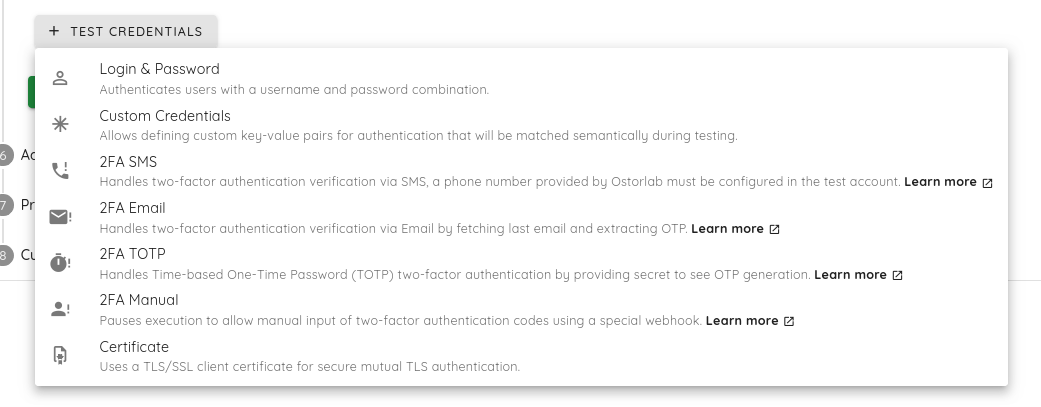
- Visual Proof (No Black Boxes): To counter the "false sense of security" inherent in automated testing, Ostorlab provides a Visual Scan Coverage Heatmap. This eliminates the black-box effect by showing you every screen, state machine transition, and WebView the agent touched, proving exactly what was—and wasn't—tested.
This is the second place where legacy tooling treats a real shift in how apps are built as an edge case rather than the norm: modern development doesn't happen in one language or one architecture anymore.
4. Feature Gaps and Framework Support
As mobile development shifts heavily toward cross-platform frameworks and complex hybrid environments, a security scanner must be able to understand the underlying architecture. Generic static analysis is no longer sufficient when business logic is hidden across different layers of native and non-native code.
The NowSecure Challenge
While NowSecure handles traditional native applications well, teams often run into limitations when dealing with specific cross-platform frameworks. Hybrid apps hide risk in the custom bridges and compiled logic between their native and web layers, and NowSecure's public pages don't describe how deeply it tests them. Teams that can't confirm that coverage often add other tools to fill the gap. This disjointed approach fragments the security posture and complicates the remediation process for developers.
The Ostorlab Advantage
Ostorlab is built with modern development stacks in mind, offering a unified platform that natively understands both traditional and emerging frameworks.
- Native Multiplatform Coverage: Ostorlab provides dedicated, out-of-the-box coverage for modern cross-platform frameworks like React Native, Flutter, and MAUI. Instead of skimming the surface, the engine deeply reverse-engineers the custom logic and native bridges unique to these frameworks, uncovering hidden data leaks and logic flaws that generic scanners miss.
- An All-in-One DevSecOps Platform: Rather than forcing you to buy and integrate multiple niche tools, Ostorlab consolidates DAST, SAST, Software Composition Analysis (SCA), Secret Scanning, API testing, and Attack Surface management into a single interface. It even extends support to niche and emerging ecosystems, such as providing direct scanning capabilities for HarmonyOS applications.
Understanding every framework and layer of an app is only half the win if finding those answers still means running full scans every time.
5. Operational Friction & Targeted Scanning
The true cost of a security tool isn't just its licensing fee—it is the engineering time lost waiting for full-scope scans when you only need answers about a single issue, and the effort required to fix discovered flaws.
The NowSecure Challenge
We found no option on NowSecure's public pages to scan for, or retest, a single vulnerability. When verifying a hotfix for one flaw means rescanning the whole application, developers wait on a full scan to check one issue. Ask NowSecure how a single fix is verified. Remediation also means sifting through lengthy reports to decode generic warnings.
The Ostorlab Advantage
Ostorlab is engineered for surgical precision and rapid verification, allowing you to target specific security concerns without the operational friction of a full app scan.
- Targeted Deep-Dives & Surgical Testing (DigDeeper & SVA): Instead of running a heavy, hours-long scan for every scenario, Ostorlab gives you pinpoint control:
- DigDeeper: Allows security teams to zoom in and investigate an existing finding further, asking targeted questions and gathering extra context on a specific flaw.
- Single Vulnerability Assessment (SVA): Allows you to run a focused scan targeting a specific vulnerability, CVE, or hotfix, saving massive amounts of time and compute by skipping full app re-analysis.
- One-Click Code Remediation: Rather than handing developers static PDFs, Ostorlab generates AI-driven, ready-to-merge secure code fixes directly inside GitHub and GitLab workflows, enabling teams to review and apply fixes in seconds.
If your apps ship different versions for different countries or regions, this is a problem Ostorlab has been solving since early on.
6. Testing Geo-Restricted Applications
Many enterprise applications are regional, restricted to specific countries due to compliance, local banking regulations, or licensing. Testing these apps often creates significant operational friction when security tools cannot access location-locked binaries or backends.
The NowSecure Challenge
We found no location-based app fetching on NowSecure's public pages. Without it, testing a geo-restricted app requires manual workarounds to bypass regional blocks, adding friction for teams that need to audit location-sensitive features or scan regional app variants across different markets.
The Ostorlab Advantage
Ostorlab handles regional testing natively out-of-the-box, completely eliminating the need for complex network configurations, VPNs, or third-party integrations.
- Zero-Setup Regional Fetching: Select the target country directly when ingesting an app from global App Stores or Google Play. Ostorlab automatically fetches the localized binary without requiring manual VPNs or proxy setups.
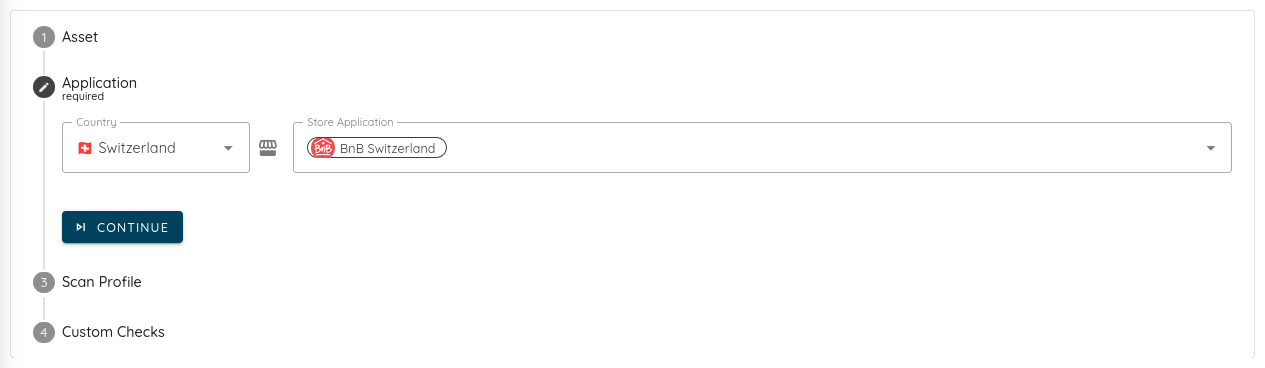
- Native Geo-Location Execution: The testing agent automatically simulates the target region during dynamic analysis, ensuring location-restricted APIs and business logic execute seamlessly as if the scanner were physically located in that country.
Limitations of this comparison
- Vendor capabilities, pricing, and documentation change frequently. Details about NowSecure may have changed since 27 July 2026.
- No independent benchmark of detection rates, false-positive rates, or scan speed was run for this article.
- This article does not report hands-on testing of NowSecure. Statements about NowSecure reflect its public materials; statements about Ostorlab reflect Ostorlab's own product documentation.
- Verify current capabilities, pricing, and deployment options directly with each vendor, ideally by testing both platforms against your own applications.
The Bottom Line: Built for How Apps Actually Work Today
Across all six of these areas, the same pattern shows up: NowSecure's platform reflects an earlier era of mobile development, one where apps were mostly native, testing followed a single CI/CD path, and a full-scope scan was an acceptable price to pay for an answer. Ostorlab was built for the mobile ecosystem as it actually exists now, cross-platform by default, distributed regionally, and secured behind real authentication, not a login form, and priced to match how teams actually use it rather than how big their org chart is.
None of this makes NowSecure a bad platform. It makes it a platform solving yesterday's problems well. The question worth asking during your next evaluation isn't just "does this tool find vulnerabilities?" It's "was this tool built for the app I'm actually shipping?"
If you're evaluating MAST platforms and want to see how Ostorlab handles your specific stack, region, or framework, start a free scan or book a demo to see the difference firsthand.
Already using NowSecure? Compare Ostorlab with NowSecure on the same app: same target, same time box. A finding counts only after your team has reproduced it.