A French bank cut off a compromised supplier. Five days later, about €100 million left its own account in instant transfers.
On October 27, Crédit Mutuel Arkéa found signs that one of its service providers had been compromised. It cut the connection and alerted the authorities. Nothing suggested the bank itself was at risk.
On Sunday, November 1, payment orders started going out from the bank's own account. Each instant transfer reached its destination in seconds. By the time the bank saw the scale of it, on Tuesday morning, its provisional estimate of the loss was about €100 million, and the money was already moving through crypto exchanges. The first public alarm came from an on-chain investigator, not the bank.
The attackers didn't need to break the front door. They came in through a supplier, and they left before anyone checked the bill.
So this issue asks: what does cutting off a compromised supplier actually close? The Deep Dive follows the Arkéa money and the gap between disconnecting a provider and revoking what it held. Technical Research explains ARTEX, the AI attack framework the FBI warned about this week, and how it got into Korean banks through a page built for loan brokers.
Inside this issue
- 🌡️ Threat Level: High Alert
- ⚡ News: A guarantee provider's breach reaches Japanese banks, hackers hit the body that assesses Korea's financial firms, and an exploited Outlook zero-day leaks NTLM hashes
- 🔎 Deep Dive: The Supplier Was Cut Off. The Money Left Five Days Later.
- 🎣 Is It a Phish?
- 🔬 Technical Research: The Bank App Wasn't the Target. The Loan Brokers' Lookup Page Was.
- 🛠️ Tool of the Week: Ostorlab Mobile ADR (RASP)
- 👏 Person of the Week: ZachXBT
- 📅 Event of the Week: TRUSTECH 2026
- 📚 Book of the Week: The Lazarus Heist
- 😅 The Meme
- ❓ One Question Before You Leave
Let's dig in.

🌡️ Threat Level
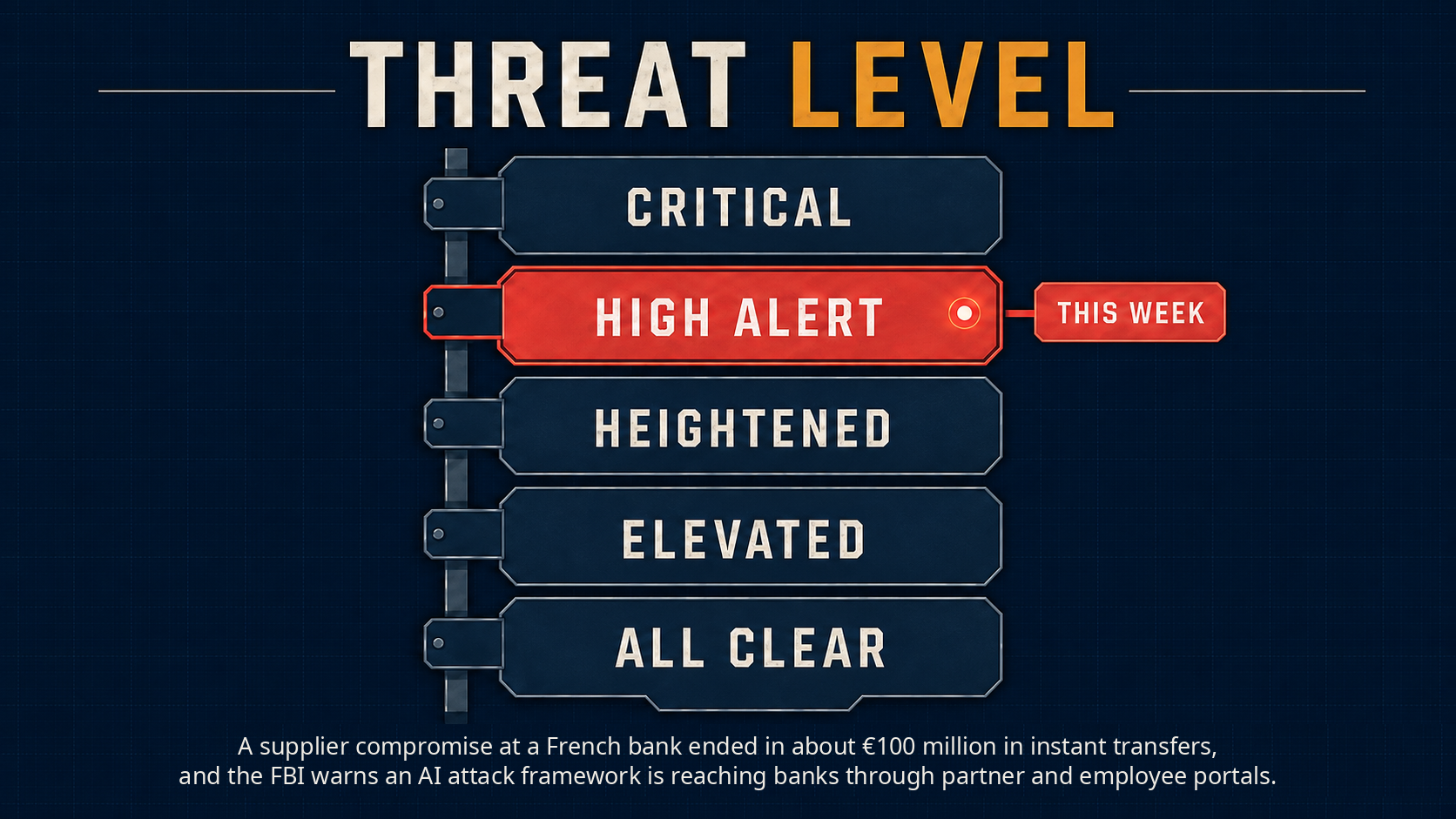
High Alert.
Supplier compromises at banks: If a provider that connects to your payment or core systems reports a compromise, don't stop at cutting the connection. Rotate every credential, certificate and key it held, and watch outgoing payments from your own accounts, especially instant transfers to new beneficiaries.
ARTEX: The FBI's FLASH-20261113-001 lists IP addresses and behaviors tied to ARTEX campaigns, including the South Korean bank attacks. Check partner, broker and employee portals for bursts of sequential lookups, and check servers for unexpected calls to LLM APIs.
Outlook (CVE-2026-124194): Exploited in the wild and in CISA's KEV catalog. Patch now.
⚡ News
One supplier, many banks
A guarantee provider's breach exposes up to 320,000 borrowers across Japanese banks
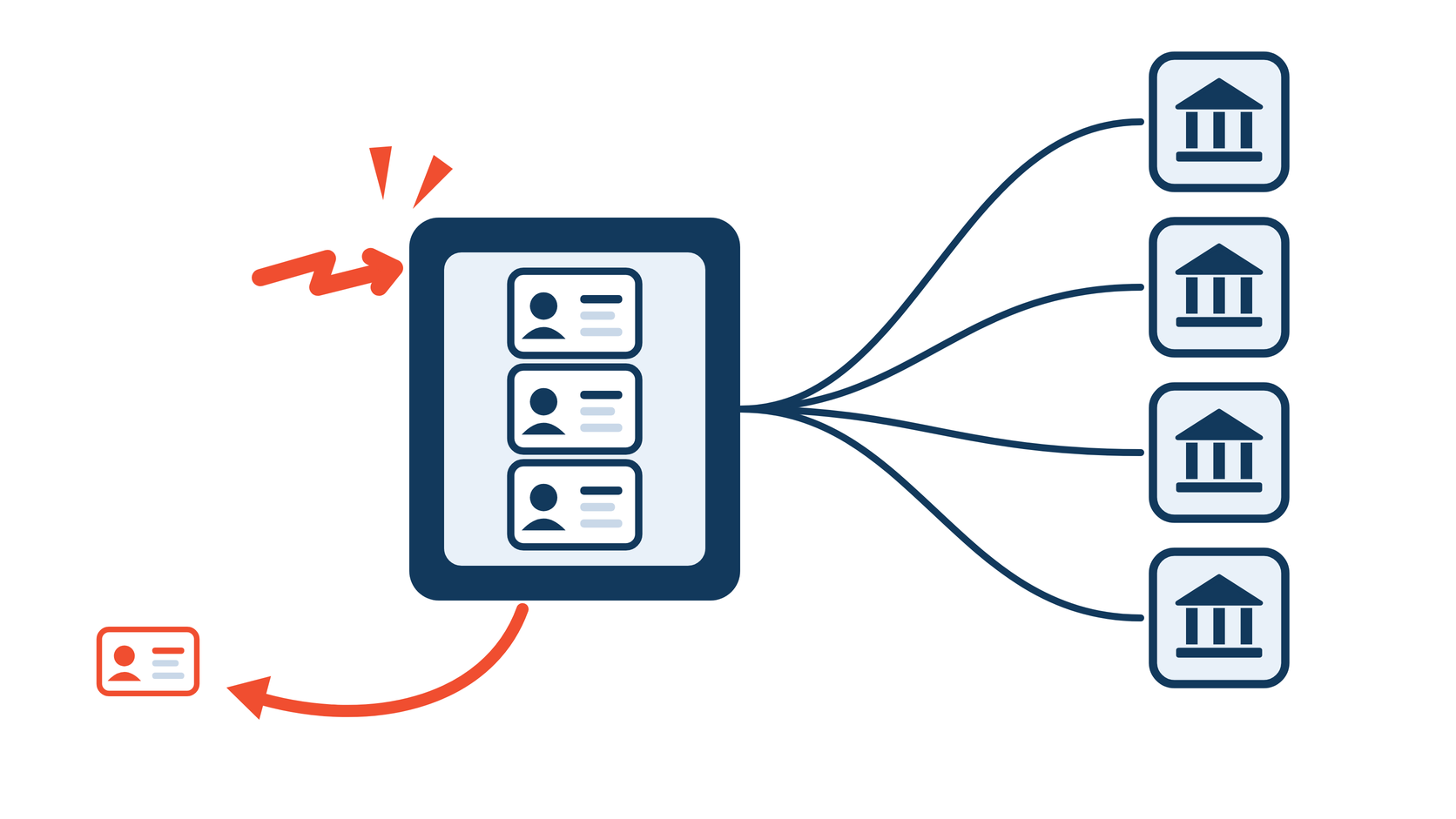
SMBC Consumer Finance guarantees card loans for regional banks, credit unions and internet banks across Japan. On November 2, it detected unauthorized access to the system that runs that guarantee business and blocked access to it the same day. On November 5, it said personal data on up to 320,118 people was in data sent out of the system.
The exposed fields include name, date of birth, address, phone numbers, email, driver's licence number, employer phone number, annual income, bank code, customer number and guarantee amount. ID document images weren't included. The partner banks have been publishing their own counts: Docomo SMTB Net Bank says up to about 122,600 of its card-loan customers are affected, and several smaller regional banks reported hundreds to a few thousand each. The cause is still under investigation.
Why it matters: None of the affected banks' own systems were breached. Their customers' data sat with a provider most of those customers have never heard of, because it guarantees their loans behind the scenes. One intrusion there reached dozens of banks at once.
The data is the second problem. Name, income, employer and the exact loan amount are what a scammer needs to call a borrower and sound exactly like their bank. Expect follow-on fraud to arrive by phone and SMS, not by malware.
If you're a bank, list which providers hold your customers' data in full, not just which ones connect to your network. If you're a provider, your clients' incident plans depend on how fast and how precisely you tell them what left.
A bank can be breached without a single one of its own servers being touched.
SMBC Consumer Finance breach (INTERNET Watch) · Docomo SMTB Net Bank notice
The inspector, inspected
Hackers reach the site where Korean financial firms file their security assessments
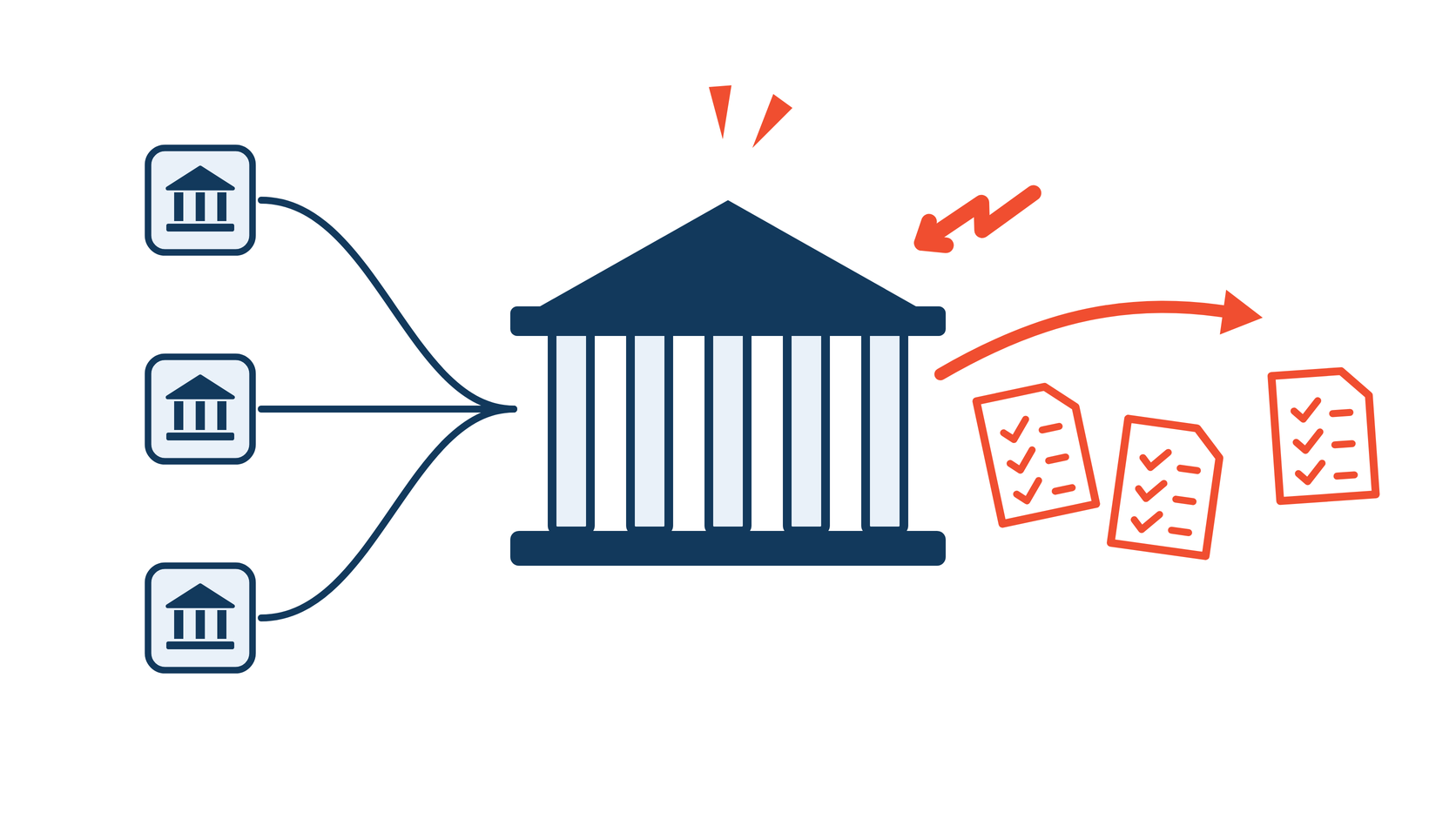
South Korea's Financial Security Institute (FSI) is the body that handles cybersecurity for the country's financial sector. On November 9, it detected abnormal access to its continuous-assessment site, where financial firms submit the documents required for their security evaluations. About 130 files from 48 companies are estimated to have leaked so far.
The Financial Services Commission and the Financial Supervisory Service launched an on-site inspection immediately, followed by a targeted audit with related agencies from November 16. From November 23, connections that use outdated protocols will be blocked on the systems firms use to exchange documents. FSI president Park Sang-won apologized publicly on November 12: "We deeply regret that this incident occurred."
Why it matters: This comes after a wave of breaches at Korean banks and lenders in September and October, including Shinhan, KB Kookmin and Hana (more in this issue's Technical Research). The documents filed with the FSI describe how financial firms protect themselves. In the wrong hands, that is a map of where each firm is weakest.
It also shows that security bodies are suppliers too. Every firm that uploaded its assessment trusted the FSI to keep it safe, in the same way banks trust any other provider with their data.
If your organization shares audit reports, pentest results or assessments with a regulator, insurer or certification body, know where they're stored and for how long. Then ask what an attacker would learn from them.
A security assessment is only private as long as everyone holding a copy keeps it that way.
FSI breach and apology (Seoul Economic Daily)
Hashes, served by email
Outlook zero-day hands attackers the user's NTLM hash
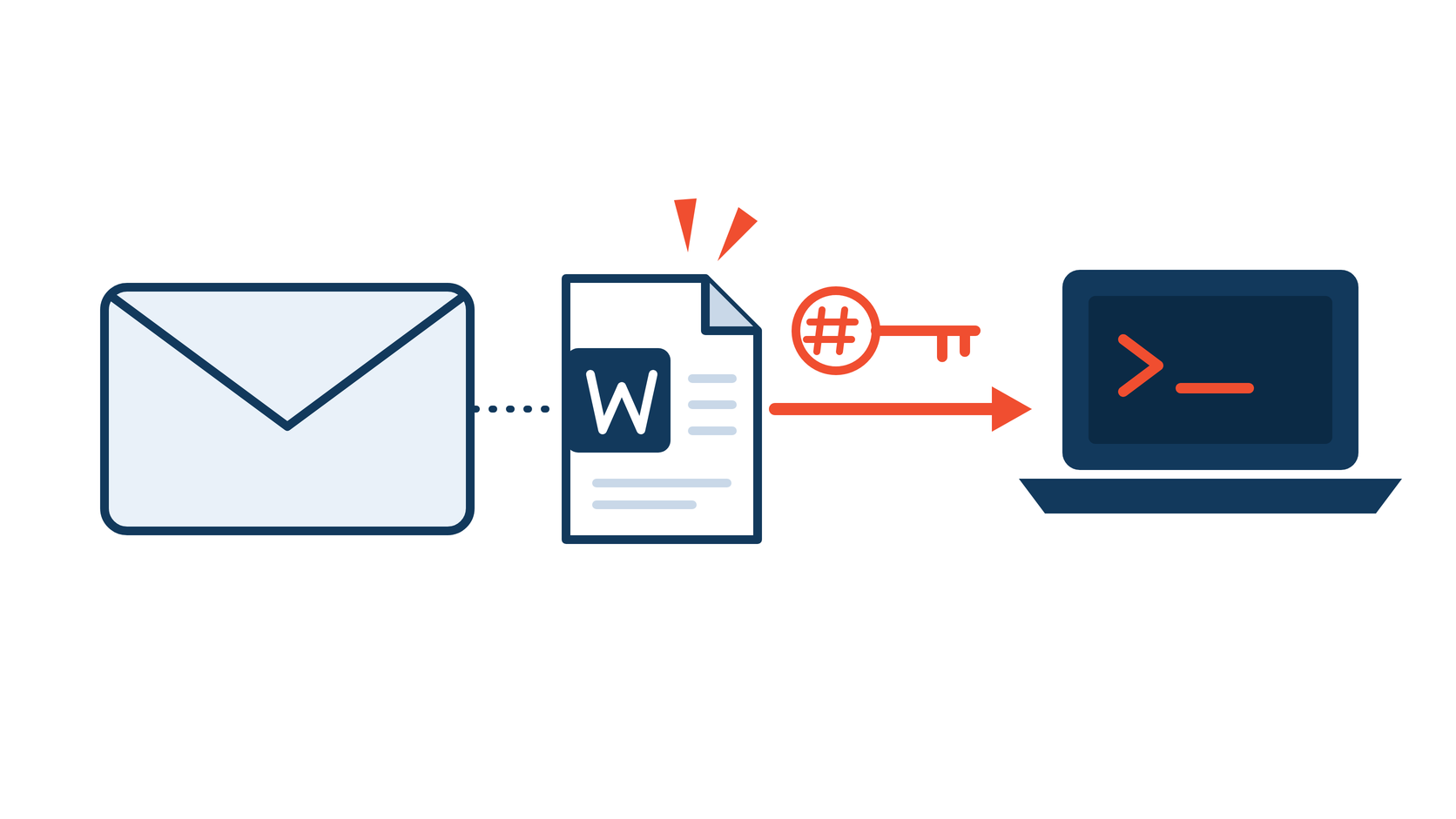
Microsoft's November Patch Tuesday, released November 10, fixed 1,093 CVEs according to Tenable's count. The one to prioritize is CVE-2026-124194, an Outlook spoofing vulnerability that Microsoft says was exploited in the wild as a zero-day. An attacker who convinces a target to open a crafted Office file can obtain the target's NTLMv2 hash. CISA added it to its Known Exploited Vulnerabilities catalog the same day.
It's rated moderate, with a CVSS score of 6.5. Tenable notes that the advisory credits the discovery to a security researcher who used Claude.
Why it matters: A score of 6.5 is easy to push down the list. An exploited NTLM hash leak isn't. A captured NTLMv2 hash can be cracked offline or relayed to services that still accept NTLM, so one opened file can become one compromised account, which is how many intrusions into banks start.
Patch Outlook now. Then reduce what a stolen hash is worth: block outbound SMB to the internet, put privileged accounts in groups that can't use NTLM, and keep track of which internal services still accept it.
The CVSS score describes the bug. Exploitation in the wild tells you how urgent the patch is.
November Patch Tuesday (Tenable) · CISA KEV addition
🔎 Deep Dive: The Supplier Was Cut Off. The Money Left Five Days Later.
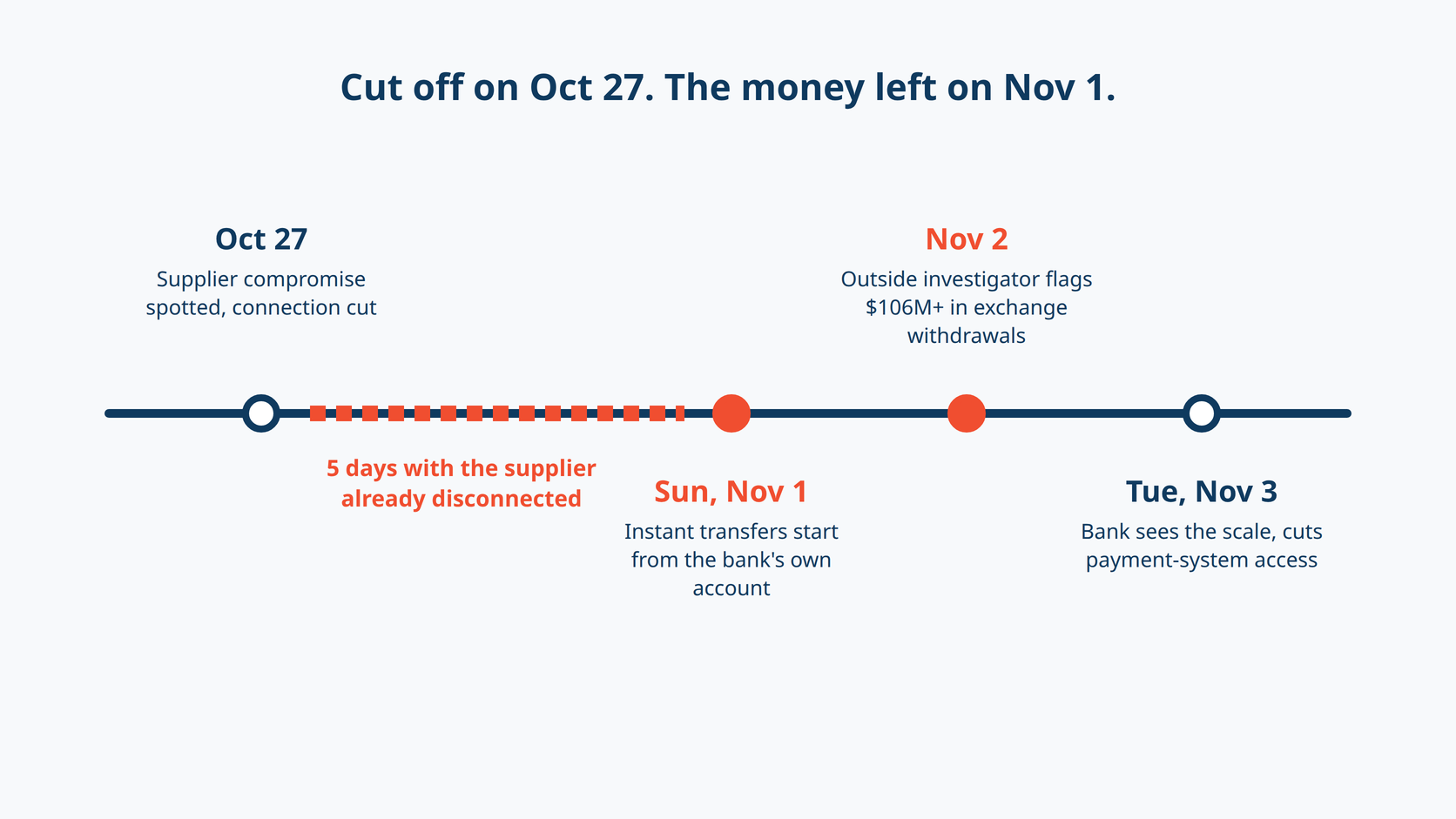
On October 27, Crédit Mutuel Arkéa saw signs that one of its service providers had been compromised. It cut the connection to that provider and alerted the authorities. At that point, according to the bank's chairman, nothing suggested the intrusion could reach the bank itself.
On Sunday, November 1, money started leaving the bank's own account. By the time the bank understood the scale, on the morning of Tuesday, November 3, the bank's provisional estimate was about €100 million.
The supplier was already cut off. The attack started anyway.
What happened
Crédit Mutuel Arkéa is a French banking group with about €212 billion in assets. In its statement on November 4, it said the attackers "went through the platform of a service provider and thus reached Crédit Mutuel Arkéa directly." It ruled out human error on its side and said no entry was made through its online bank, Fortuneo.
The bank hasn't named the provider. Its chairman, Julien Carmona, told Les Echos that the banks involved chose not to, so that similar providers wouldn't become targets. He also said "nothing allowed us to detect that elements had been taken from this third party."
That sentence is the center of this story. Cutting the connection stopped the provider from talking to the bank. It did nothing about what had already been taken from the provider.
How the money moved
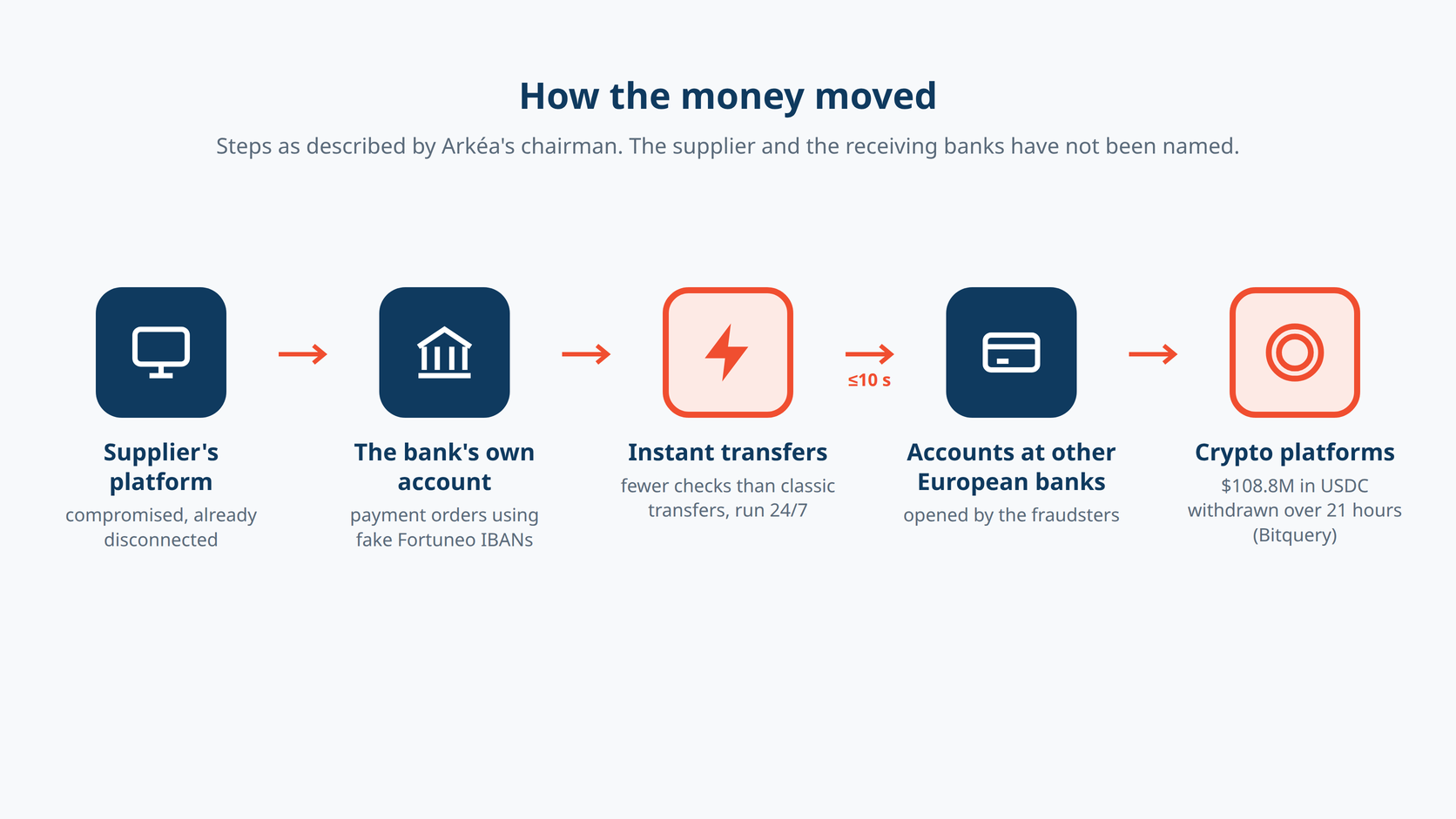
Carmona's account, reported by Silicon and Les Echos, describes four steps:
- Payment orders from the bank's own account. The attackers generated fake IBANs carrying the name of Fortuneo, the group's online bank, and used them to trigger payment orders from Arkéa's own account. Customer accounts weren't touched.
- Instant transfers. The orders went out as instant payments, which Carmona noted carry "by nature" fewer checks than classic transfers. In the euro area, an instant transfer has to reach the recipient within ten seconds, day or night, weekends included.
- Real accounts at other European banks. The money landed in accounts the fraudsters had opened at other legitimate banks.
- Crypto. From there it went to crypto platforms. Bitquery traced about $108.8 million in USDC withdrawn from Kraken, Crypto.com and OKX over 21 hours on November 1 and 2.
The first public alarm didn't come from the bank. On November 2, on-chain investigator ZachXBT flagged more than $106 million in suspicious exchange withdrawals, without knowing the victim yet. He named Arkéa on November 4 and put the total at up to $133 million (about €118 million). The bank says it can only "validate the order of magnitude."
Arkéa says customers' assets weren't affected and some transfers were only delayed. Part of the money has been blocked, and Carmona says some amounts have already been recovered. The Paris prosecutor's cybercrime section has opened an investigation for an organized-gang attack on an automated data processing system, led by France's anti-cybercrime office (OFAC).
Carmona also said the attack was "very likely" aided by advanced AI. He hasn't said what the AI did, and no evidence has been published. Treat that as the chairman's view, not a finding.
Two competing timelines
Each instant transfer settles in ten seconds. The crypto withdrawals ran over 21 hours. The bank needed about two days to see what was happening, and the first person to connect the flows to a bank was an outside investigator reading blockchains.
Carmona said crypto specialists noticed abnormal flows on Sunday and Monday, but nobody linked them to Arkéa. ZachXBT has argued that the silence let the attacker launder about $30 million by November 3 that European law enforcement could otherwise have frozen. That's his claim, not the bank's, but the direction is clear: every hour between the first transfer and the first freeze request was money that could still move.
The transfers started on a Sunday. Instant payments run around the clock, so a weekend slows the people checking, not the money.
What cutting off a supplier has to include
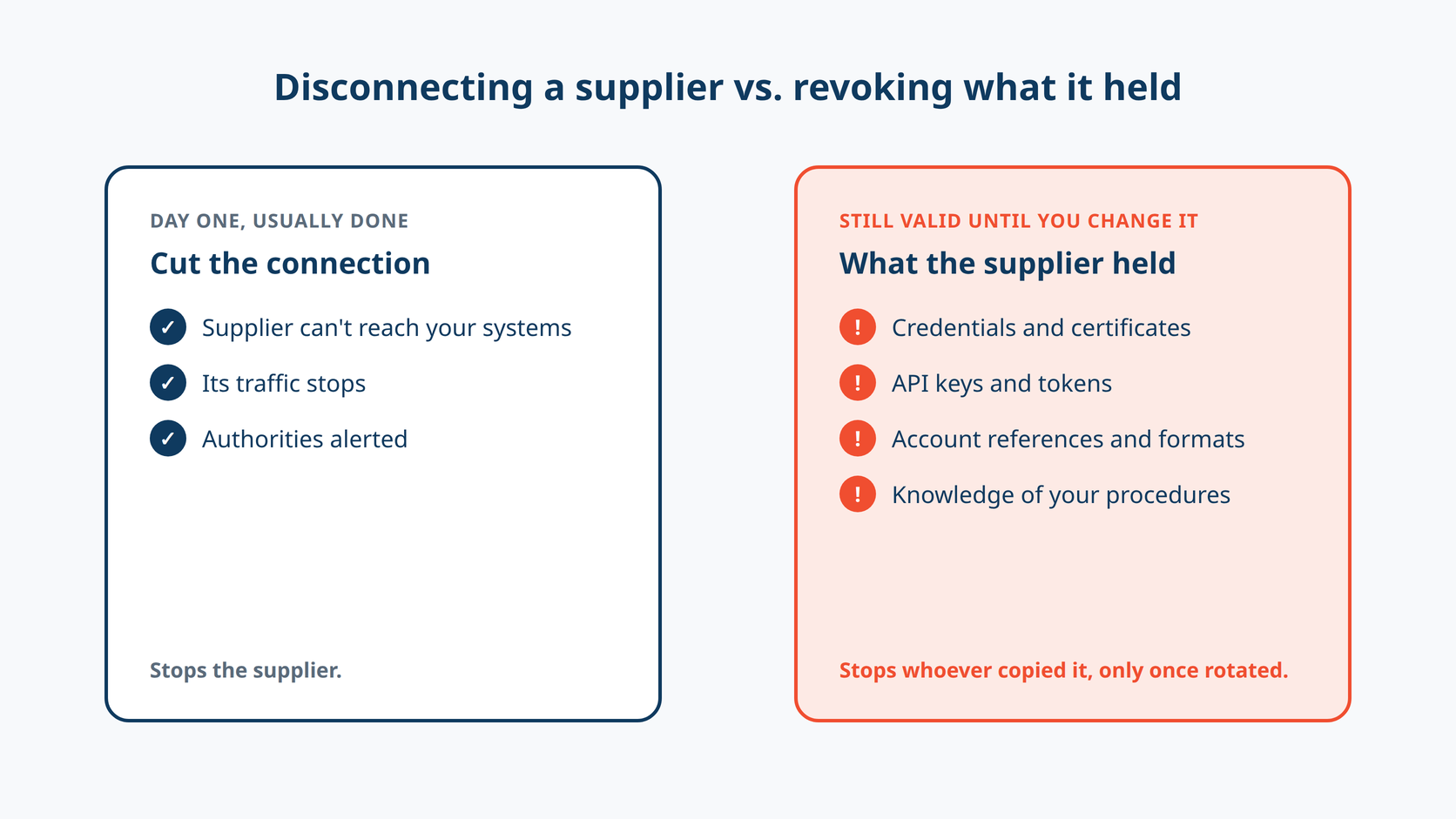
Disconnecting a compromised provider is the right first move. The Arkéa case shows why it can't be the last one. Three questions decide whether the cut actually protects you.
1. What did the supplier hold about us? A provider that connects to a bank usually holds more than a network link: credentials, certificates, API keys, account references, knowledge of internal formats and procedures. The connection can be cut in minutes. Anything copied from the provider still works until you change it. Once the fraud was found, Arkéa changed "all authentications." The question every bank should ask is what that step would have changed if it had come with the disconnection on October 27.
2. Where else is it valid? A credential issued for one integration is rarely checked only at that integration. List every system that would accept what the supplier held, including payment systems, and treat each one as exposed until proven otherwise.
3. What would its misuse look like, and who's watching for it? After a supplier incident, raise the watch on the paths that move money, not only on the supplier's connection. Here, the signal was large instant transfers from the bank's own account to accounts that had never been paid before, starting on a Sunday. That pattern is visible to a bank. It was visible to blockchain investigators first.
The four priorities
- For bank security teams: Treat a supplier compromise as a possible compromise of everything the supplier held about you. Rotate those secrets on day one, not after the fraud. Map which suppliers can, directly or indirectly, cause a payment to be issued.
- For payment and fraud teams: Apply the same scrutiny to the bank's own accounts that you apply to customers'. Set limits on instant transfers from internal and treasury accounts, alert on new beneficiaries and unusual volumes, and make sure someone can act on those alerts at the weekend.
- For service providers to banks: When you find a compromise, tell each client exactly what the attacker could have taken that belongs to them: credentials, keys, data, procedures. "We've contained it" doesn't tell a bank what to rotate.
- For regulators and the industry: Instant payments made fraud faster. Recall and freeze have to get faster too, across banks and crypto platforms. Crypto.com and OKX froze funds tied to this case once they knew what to look for. The earlier they know, the more there is to freeze.
The tension at the center
Arkéa did what most incident playbooks say: it found a compromised supplier, cut the link and alerted the authorities. Five days later the money left anyway, through a payment rail that settles in ten seconds and runs around the clock.
Cutting the supplier off is where the work starts. If you don't know what the supplier held about you, you don't know what's still open.
🎣 Is It a Phish?
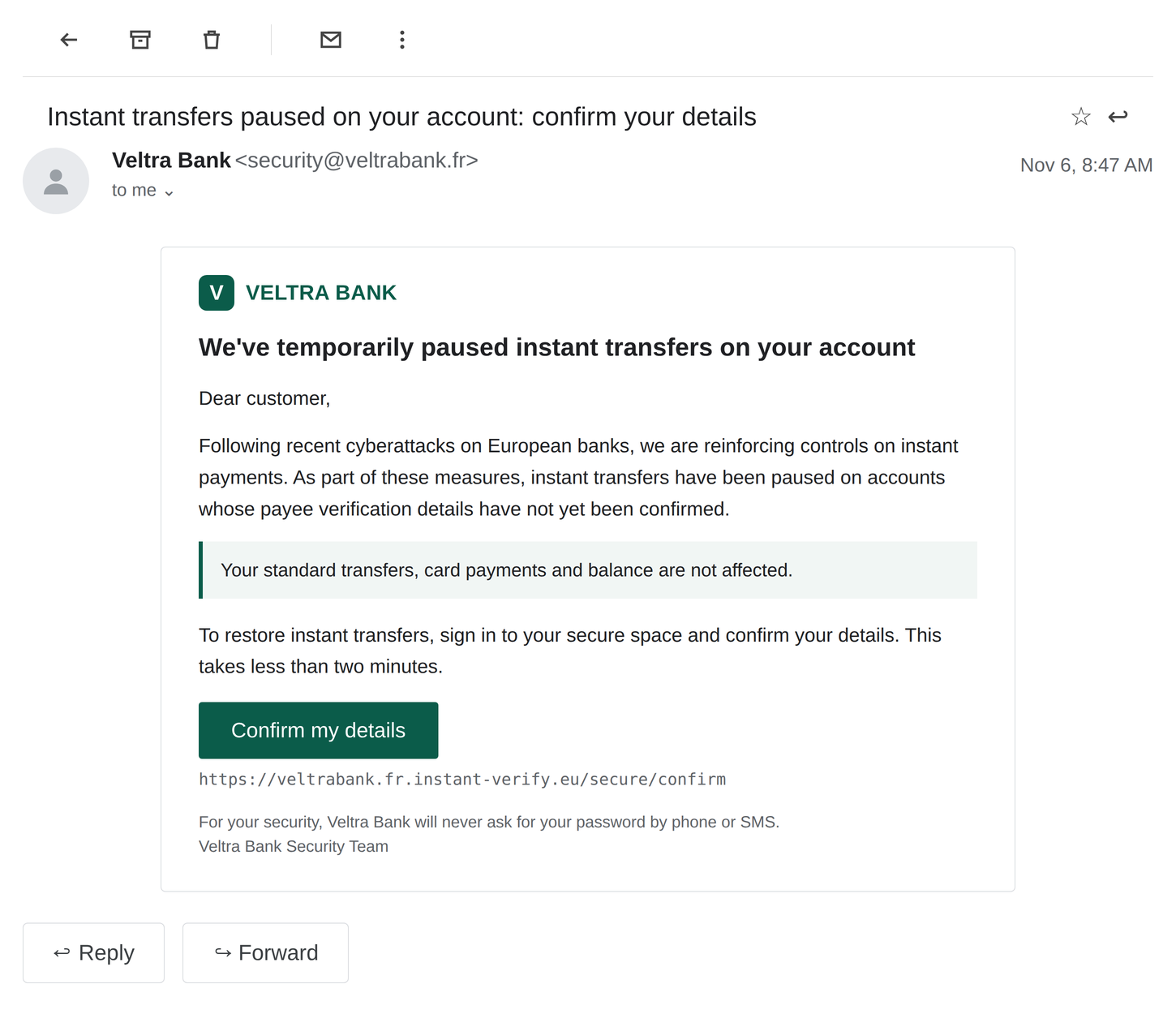
A few days after a French bank's cyberattack makes the news, this email lands in a customer's inbox.
Legitimate or phish?
- Legitimate
- Phish
🔬 Technical Research: The Bank App Wasn't the Target. The Loan Brokers' Lookup Page Was.
On November 13, the FBI published a FLASH alert (FLASH-20261113-001) on ARTEX, an open-source framework that runs a penetration test with AI agents from a goal written in plain language. The FBI says threat actors have used it against financial services, government, technology, healthcare and other sectors, with "some intrusions progressing from initial targeting to privileged access in under three hours."
One of the campaigns it names hit South Korean banks in late September and exposed personal information on about 67,000 people. Another is the ConnectWise Cloud Backup compromise from our last issue. Neither attack went after a bank's main app. Both went in through systems that get less attention.
We covered ARTEX in depth on our blog: how a free AI pentest framework became an attacker staple, with every campaign tied to it so far, the traces its agents leave in logs and what to close first. This breakdown focuses on the bank intrusions and draws on that write-up, the FBI FLASH, CrowdStrike, Zscaler ThreatLabz, Censys, Elastic Security Labs and Korean reporting on the Shinhan Bank breach.
The facts
A developer known as Autumn-27 released ARTEX on GitHub in July 2026. The FBI estimates it gathered 1,500 to 2,000 stars in ten weeks, and Wiz Research counted more than 12,000 forks by the time the developer made the repository unavailable on October 8. The FBI says it lives on through those forks, archived copies, localized versions and a commercial edition, ARTEX PRO. Independent scans in early November counted roughly 800 to 1,650 exposed consoles, depending on what each scanner counted.
ARTEX has no AI model of its own. It connects to external ones, including Claude, GPT, DeepSeek, GLM, Grok and Kimi. The FBI says Chinese models are the most common in attacks, "with DeepSeek Flash family models dominating usage" because they're cheap and, framed as a pentest, show no visible guardrails.
In the Korean campaign, CrowdStrike found the attacker's server exposed in an open directory. ARTEX was running on DeepSeek, and separate Claude Code sessions ran on GLM and Grok models, steered by a Chinese-language pentesting prompt in a CLAUDE.md file. CrowdStrike attributes the activity, with moderate confidence, to a financially motivated, Chinese-speaking actor. Korea's Financial Security Institute later said it found traffic signatures specific to ARTEX.
How ARTEX works
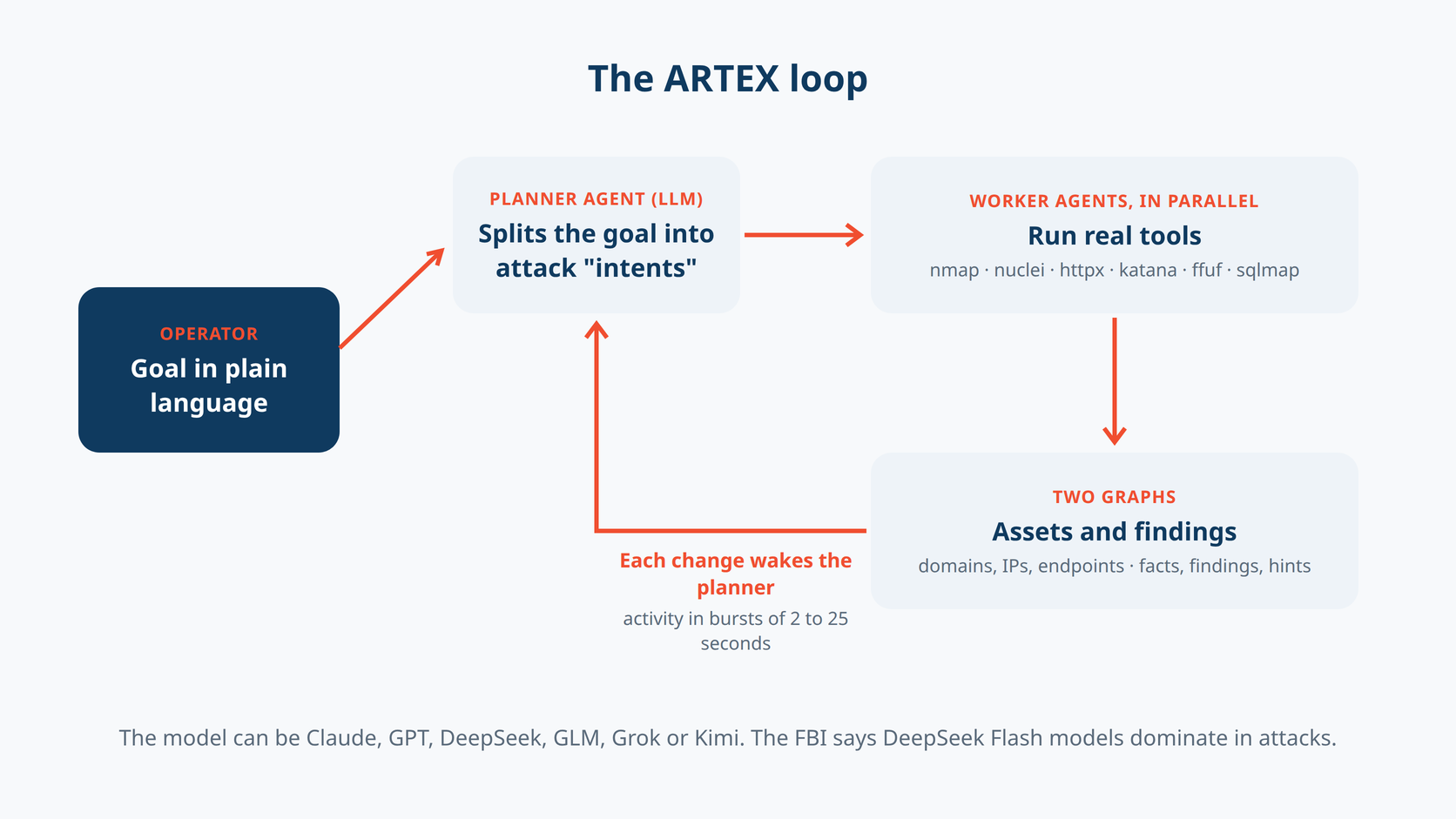
The operator types a goal. A planner agent turns it into small attack "intents," and worker agents (three per task by default in one public fork) pick those up and run real tools: nmap, nuclei, httpx, katana, ffuf, sqlmap. Every result is written to two graphs, one of assets (domains, IPs, services, endpoints) and one of exploration (findings, facts, hints). Each change wakes the planner, which decides what to try next.
The loop is what makes it fast. A human pentester reads a result, thinks and tries something. ARTEX does that in bursts of "two to 25 seconds," across many targets at once.
Its guardrails were thin. Elastic reports that the agents are told they're part of an authorized pentest, that the rules-of-engagement scope check was removed, and that newly discovered assets are added to scope automatically. The default blocklist covered government and education domains. According to Zscaler, it didn't extend to financial institutions.
What happened at Shinhan Bank
The breached service was a simple-inquiry page where loan brokers check the status of loan applications they've submitted for customers. Logging in normally takes the broker's name, resident registration number and phone number, followed by an SMS code.
According to the bank's account, reported by Hankyung, the attacker got in "without going through normal identity verification." They worked out the structure of the service's request messages, then substituted lookup values at random to pull records. The customer numbers they collected were used to fetch more details, such as contact information. Zscaler says the agents found and exploited SQL injection and an authentication bypass. Neither source names the exact flaw.
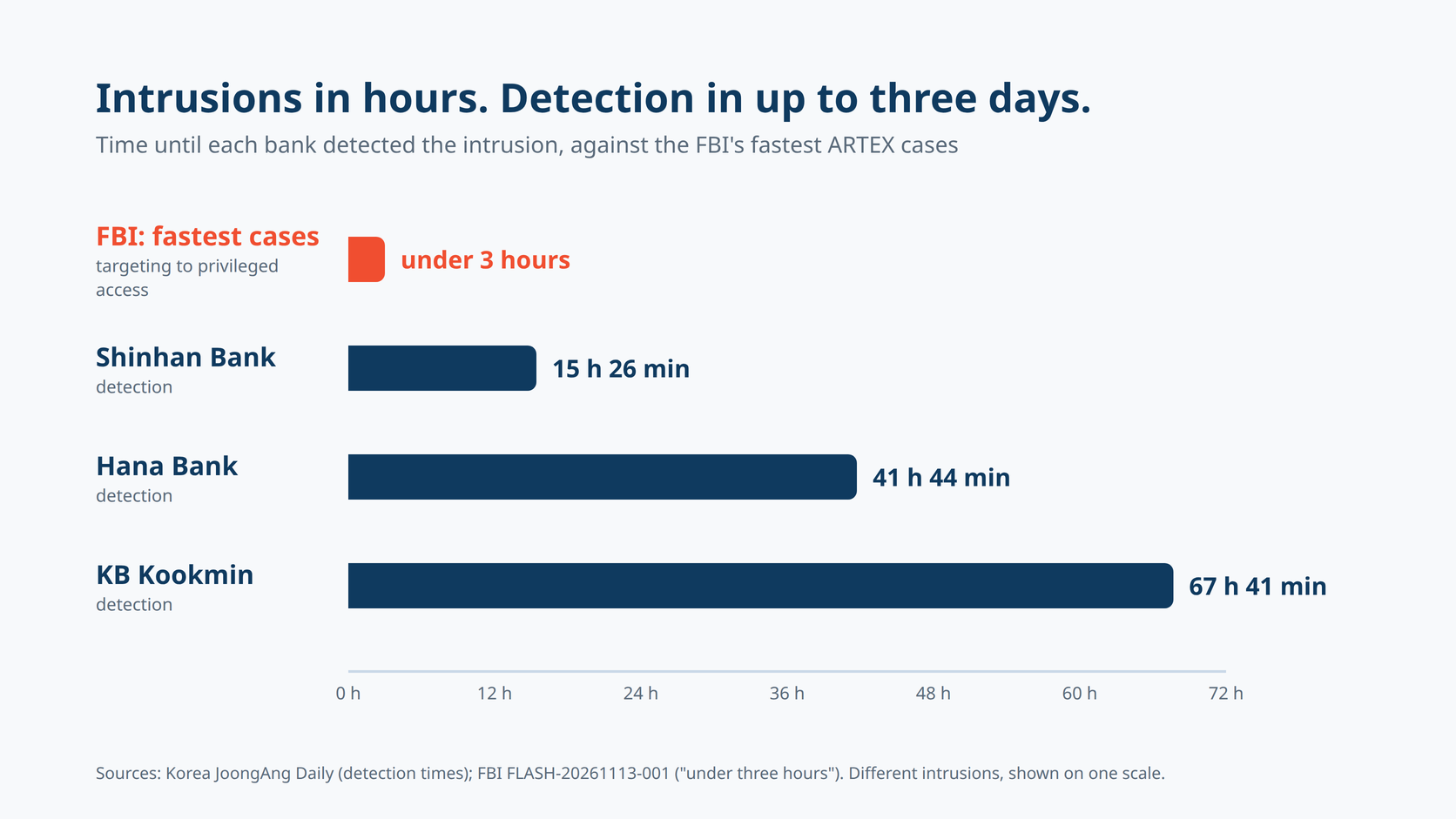
About 25,000 customers were affected: names, phone numbers, annual income and loan limits, plus resident registration numbers for some. The attack was concentrated on September 29 and 30, and Shinhan noticed it from a spike in page views. Korea JoongAng Daily reports that detection took about 15 hours at Shinhan, nearly 42 hours at Hana and nearly 68 hours at KB Kookmin. At KB, the entry point was an employee mobile work-support system. At Hana, it was a sales-support system.
Where the boundary failed
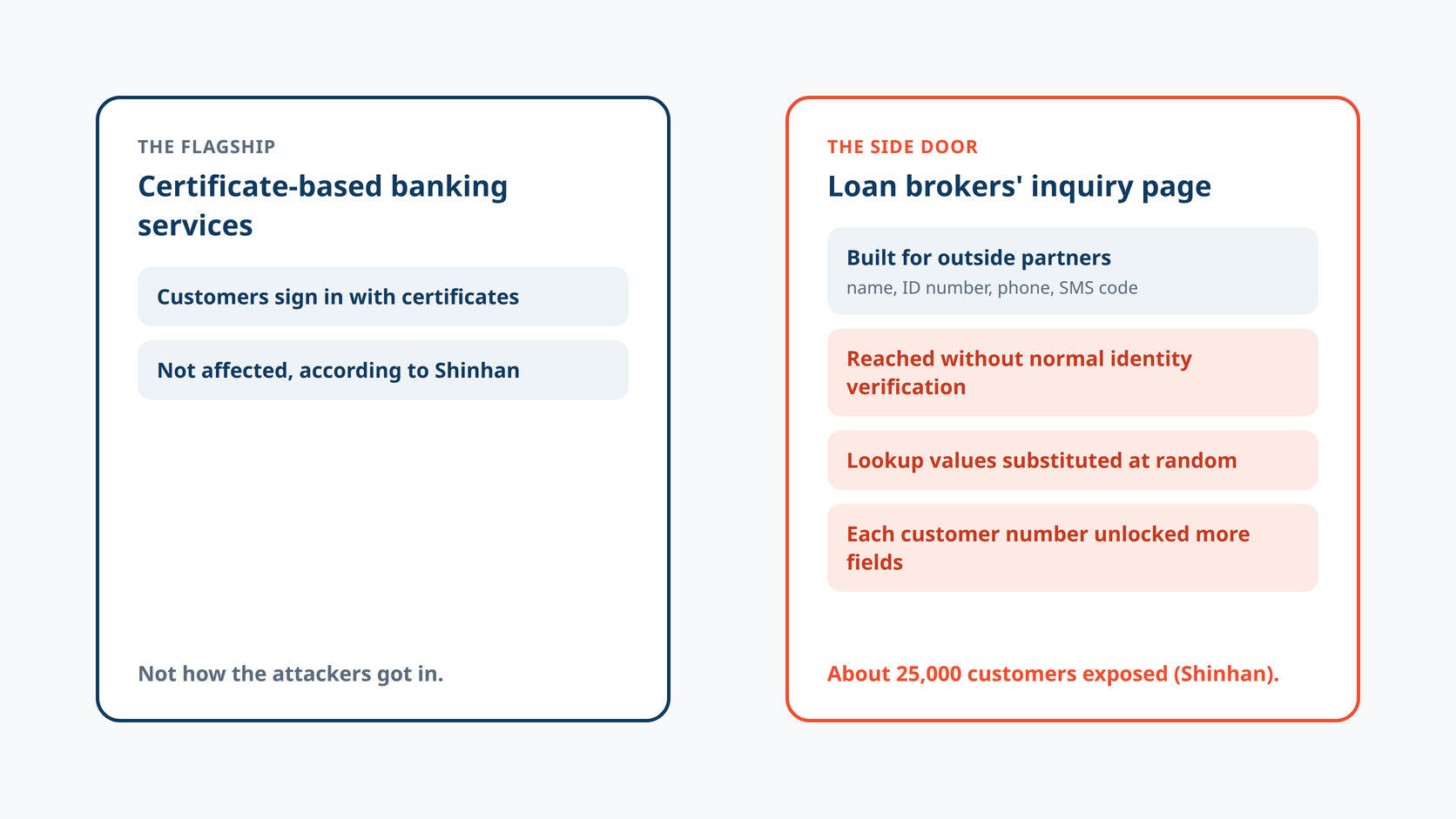
The bank's main apps weren't the way in. The weak point was a page built for a small group of outside partners, with an identity check at the front and no per-record authorization behind it. Once a request reached the lookup, the server answered for whichever customer number it was given.
That's the pattern the FBI calls out. ARTEX "excels at identifying and exploiting peripheral systems receiving less security attention than flagship applications, including partner and supplier portals, mobile backends, employee applications, sales-support systems." Those are the same Korean entry points: a broker portal, an employee mobile app, a sales-support system.
The enumeration that got past that check isn't new. What changed is the cost. An agent that rewrites requests, reads the errors and tries again every few seconds turns an obscure partner page into something worth mapping, at many banks at once.
The step-by-step attack chain
- Goal: The operator gives ARTEX a target and an objective in natural language.
- Map: Workers enumerate domains, subdomains and endpoints, and find the less-visible apps: broker portals, employee backends, sales-support systems.
- Probe: Agents test authentication and input handling, read the responses and retry with small changes.
- Bypass: On Shinhan's broker inquiry page, requests reached customer lookups without normal identity verification.
- Enumerate: Lookup values are substituted at random, and each customer number found unlocks more fields.
- Collect: Names, phone numbers, income and loan limits are pulled until someone notices the traffic.
[Goal in plain language] -> [Planner splits it into intents] -> [Workers map peripheral apps] -> [Broker lookup page found] -> [Identity check bypassed] -> [Lookup values enumerated] -> [Customer numbers unlock contact data] -> [~25,000 records out before detection]What defenders should take from it
- Inventory the side doors first: List every internet-facing app, especially partner and broker portals, employee mobile backends, sales-support tools and old services. These are what ARTEX found. If they aren't in your pentest scope, attackers are testing them for you.
- Authorize every record on the server: A login at the front isn't enough. Each lookup should check that this user is allowed to see this customer, and return only the fields the task needs.
- Alert on how agents behave: The FBI recommends alerting on sequential lookups and unusually high numbers of records per session on partner and employee portals. Other signals: bursts of near-identical requests with small, incremental changes, and outbound calls from servers to LLM APIs they have no reason to reach. A simple first query over access logs:
-- Sessions on the broker inquiry endpoint that touched far more customers than a person wouldSELECT session_id, COUNT(DISTINCT customer_id) AS customers, MIN(ts), MAX(ts)FROM access_logWHERE endpoint = '/broker/inquiry' AND ts > now() - interval '1 day'GROUP BY session_idHAVING COUNT(DISTINCT customer_id) > 50ORDER BY customers DESC;- Measure detection in hours: The three banks took 15, 42 and 68 hours to notice. The FBI's fastest cases reached privileged access in under three. Rate limits and per-session record caps buy time when monitoring is slow.
- Use phishing-resistant authentication for partners: Broker and partner accounts deserve the same protection as staff, with passkeys or hardware security keys where possible, so a guessed or reused credential isn't the only thing between an agent and the data.
🛠️ Tool of the Week: Ostorlab Mobile ADR (RASP)
What does your banking app see on the phones it runs on?
This issue's attackers went around the banks' main apps. Banking apps are still the front door for most customers, and they run on devices the bank doesn't control. Some are rooted or jailbroken. Some run a debugger, Frida, or a cloning app that wraps the bank's app inside another one. Some send every request through a proxy. An app with no runtime protection can't see any of that, and neither can the team that owns it.
Mobile ADR (Mobile Application Detection & Response) is Ostorlab's new runtime protection product. It adds RASP (runtime application self-protection) to a copy of the app you've already built, with no source code and no SDK, and shows you what each install observes on the device.
How it works:
- In the Ostorlab web app, open Protect → Mobile ADR and upload the APK, AAB or IPA you would publish.
- Choose which checks the protected app runs. They're all on by default.
- Download the protected copy, sign it and publish it as usual.
- Each install runs its checks when the app starts and then about every minute. The results appear in the Events tab, with the app and build that reported them.
What the checks look for: rooted and jailbroken devices, debuggers, Frida and other hooks, emulators and simulators, app cloning and virtualization, network interception (VPNs, and system proxies on iOS) and, on Android, changes to the runtime's own code in memory. It supports Android 12 and later and iOS 12 and later. On Android, the protected copy also encrypts the app's own code.
The code inside your app is public. A RASP runs on every customer's device with your app's permissions, so the runtime and the packer are open source under Apache-2.0. Your security team can read and build exactly what will ship.
Know what it won't tell you. Mobile ADR is new. It detects and reports. It doesn't score events or send alerts yet, so you decide what each event means for your app. Every client-side check can be defeated by someone who fully controls the device, and the repository's TODO.md lists the known gaps. One more thing to plan for: the protected Android copy needs Android 12 or later, so it won't install on older devices.
👏 Person of the Week
ZachXBT
This week we're highlighting ZachXBT, the pseudonymous on-chain investigator who traces stolen crypto and publishes what he finds. He has worked as an incident response advisor at the crypto investment firm Paradigm since February 2025.
His method is public and repeatable: follow the funds across wallets, bridges and exchanges, then tie the on-chain trail to off-chain evidence such as archived websites, Telegram groups and social media profiles. His published investigations have led to arrests, including the five-person ring behind more than $2.5 million in NFT thefts that French authorities convicted.
His work showed up at the center of this issue. On November 2, before any bank had said anything, he flagged more than $106 million in suspicious withdrawals from exchange accounts. Two days later he tied them to Crédit Mutuel Arkéa. For most of the first 48 hours, the clearest public picture of a French bank's €100 million loss came from someone reading blockchains.
For showing how much defenders can see when stolen money touches a public ledger, ZachXBT is our Person of the Week. 👏
📅 Event of the Week
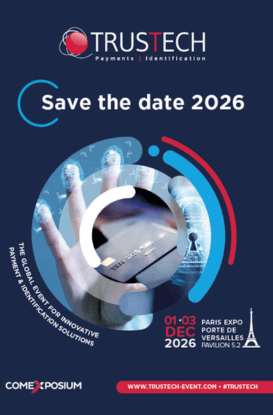
TRUSTECH 2026
TRUSTECH is the annual Paris trade show for payment and identification technology: cards, instant and mobile payments, digital identity and biometrics.
This issue's heist ran on instant payments, and the bank behind it is French. TRUSTECH brings banks, payment providers and the suppliers they depend on into the same halls, which makes it a good week to ask your own providers what they hold about you, and how fast they would tell you if it leaked.
📍 Paris, France (Paris Expo Porte de Versailles, Pavilion 5.2)📅 December 1 to 3, 2026🎟️ Free for professionals, with registration on the TRUSTECH website
📚 Book of the Week: The Lazarus Heist
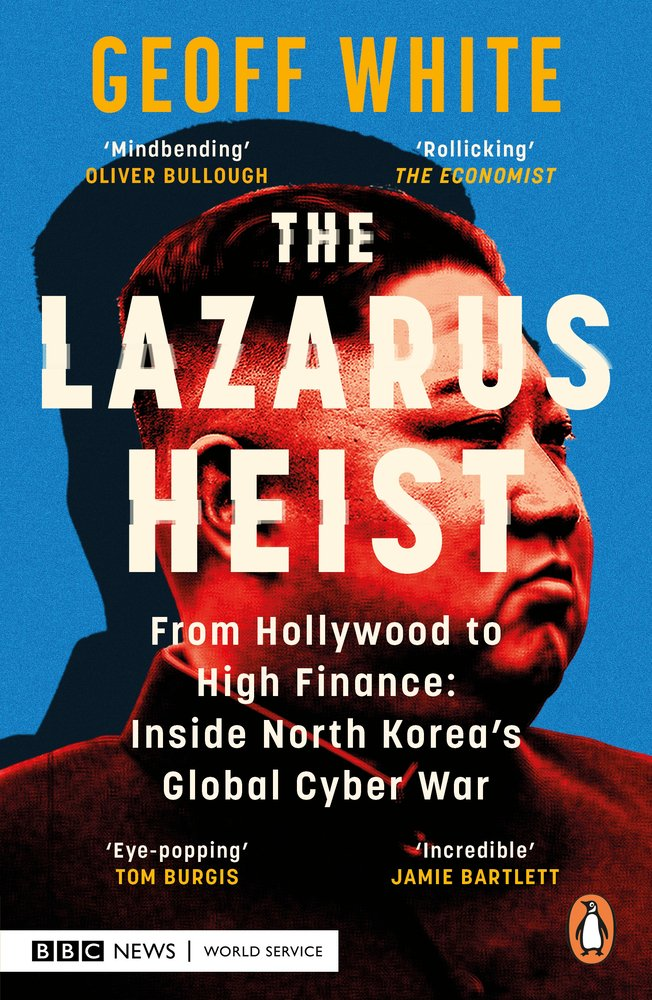
A bank heist where the money moved first and the questions came later
The Lazarus Heist by Geoff White follows North Korea's hackers from early attacks to the 2016 theft at Bangladesh Bank, where attackers inside the bank's systems sent payment orders for close to $1 billion. Most were stopped. About $81 million got through.
The book reads like a heist story, and the parts that matter most for defenders are the ones after the break-in: how fraudulent orders got through the payment network, why they went out when nobody was watching, and how the money was moved through accounts and casinos faster than anyone could recall it. Ten years later, the Arkéa case follows the same arc on faster rails.
For understanding why the cash-out matters as much as the intrusion, The Lazarus Heist is a good place to start.
😅 The Meme

If one of your suppliers told you this morning that it had been compromised, could you list everything it holds that would still work against you after you cut the connection?
Every bank in this issue also meets its customers through a mobile app. We scanned 2,686 of them for our Mobile Banking App Security Report 2026. Here's what we found.
That's it for this issue. Check what your suppliers hold, look at your side doors, and we'll see you next issue.
The Breach Brief, Ostorlab Team