
Best SAST Tools in 2026: Source Code Scanning Tools Compared
The best SAST and source code scanning tools in 2026, Ostorlab, GitHub Code Security (CodeQL), Semgrep, Snyk Code, Checkmarx One, SonarQube, Veracode, Black Duck Coverity and OpenText Fortify, compared on languages, CI/CD, false positives, AI fixes and pricing.
Quick answer: The best SAST tools in 2026 are Ostorlab, GitHub Code Security (CodeQL), Semgrep, Snyk Code, Checkmarx One, SonarQube, Veracode, Black Duck Coverity and OpenText Fortify. Each fits a different team:
- Ostorlab for findings proven exploitable, with code, web apps, APIs and mobile apps tested together.
- GitHub Code Security (CodeQL) for teams on GitHub.
- Semgrep for fast scans and custom rules.
- Snyk Code for developers working in the code editor and pull request.
- Checkmarx One for enterprise governance and broad language coverage.
- SonarQube for security inside code-quality gates.
- Veracode for enterprises that also scan binaries.
- Black Duck Coverity for large C and C++ codebases.
- OpenText Fortify for established AppSec programs that need on-premises.
Ostorlab is the SAST tool to choose when the problem is too many unproven findings: its AI agent reviews source code for vulnerabilities and logic flaws, and confirms findings with a working exploit when the running web app, API or mobile app is in the same scan. GitHub Code Security, Semgrep and Snyk Code are the strongest choices for developer workflows, and Checkmarx One, Veracode and OpenText Fortify for enterprise governance.
Ostorlab at a glance
- What it is: Ostorlab is an application security testing platform for source code, web apps, APIs and mobile apps (Android, iOS and HarmonyOS).
- SAST approach: An AI agent reviews code for vulnerabilities, logic flaws and multi-step bugs, instead of a fixed rule set.
- Key differentiator: When the running app is in scope, every finding the AI agents confirm comes with a working exploit, severity, impact and evidence. Repositories scanned on their own get findings with code context and evidence.
- Languages: 53 listed on the source code page, from Python, Java and Go to COBOL, ABAP and Solidity.
- Workflow: GitHub, GitLab, Bitbucket, Azure DevOps and self-hosted Git; fixes pushed to the pull request.
- Deployment: SaaS, hybrid, or scanner nodes on-premises, with Ostorlab Cyber Models or your own AI provider key.
- Pricing: Published plans.
About this guide
This guide is published by Ostorlab, which develops one of the tools compared. Statements about the other tools come from each vendor's own website and documentation, checked on 7 October 2026 and listed in Sources. Statements about Ostorlab come from Ostorlab's product pages and documentation. Vendors describe their products in different terms, so where figures aren't directly comparable, we say so.
Evaluation criteria: language support, CI/CD and repository integration, scan coverage, how false positives are handled, whether findings are proven exploitable, AI-assisted fixes, deployment and pricing.
What is SAST?
Static application security testing (SAST) analyzes an application's source code to find security vulnerabilities before the application is released. Source code scanning tools usually combine SAST with software composition analysis (SCA) for open-source dependencies and secrets detection for leaked keys and tokens.
Finding issues is only part of the job. According to the CrowdStrike 2024 State of Application Security Report, 60% of AppSec teams rank vulnerability prioritization among their top challenges. The best SAST tool for a team is the one that fits its languages and workflow and helps it fix the findings that matter.
For a deeper explanation of how source code scanning works, read Source Code Security: From Signal to Validated Risk.
Best SAST tools at a glance
| Platform | Languages | CI/CD | Scan coverage | Noise reduction | AI-assisted fixes | Pricing |
|---|---|---|---|---|---|---|
| Ostorlab | 53 languages listed, from Python, Java and Go to COBOL, ABAP and Solidity | GitHub, GitLab, Jenkins, Azure DevOps, Bitbucket, CircleCI, Harness | SAST, SCA and secrets, plus web, API and mobile testing in the same scan | Findings confirmed with a working exploit when the running app is in scope | Fixes pushed to the pull request | Published plans |
| GitHub Code Security (CodeQL) | 10 language groups, including C/C++, C#, Go, Java and Kotlin, JavaScript and TypeScript, Python, Ruby, Rust and Swift | GitHub Actions; CodeQL CLI for other CI | SAST; secrets with Secret Protection; dependencies through Dependabot | Semantic data-flow analysis | Copilot Autofix | $30 Code Security, $19 Secret Protection, per committer per month |
| Semgrep | 35+ languages | GitHub Actions, GitLab CI/CD, Jenkins, Bitbucket, CircleCI, Buildkite, Azure Pipelines, Semaphore | SAST, SCA, secrets | Semgrep Multimodal triages findings and flags likely false positives | Step-by-step fix guidance in the pull request | Free up to 10 contributors; Teams from $30 per contributor per month |
| Snyk Code | 16 language groups, including Java and Kotlin, JavaScript, TypeScript, Python, Go, .NET and Swift | GitHub Actions, GitLab CI, Jenkins, CircleCI, Azure Pipelines | SAST, with SCA, container and IaC in the Snyk platform | Symbolic and machine-learning analysis | Snyk Agent Fix | Free plan; Team from $25 per month |
| Checkmarx One | Broad, including legacy languages such as COBOL and PL/SQL | GitHub Actions, GitLab, Jenkins, Azure DevOps | SAST, SCA, secrets, IaC, container and API security | AI finding analysis and triage | AI remediation and Developer Assist | Quote-based |
| SonarQube | 35+ languages for security analysis, 40+ overall | Server: GitHub Actions, GitLab CI/CD, Bitbucket Pipelines, Azure Pipelines, Jenkins. Cloud adds CircleCI and Travis CI | SAST with taint analysis (paid editions), secrets, IaC | Cross-file and cross-function analysis | AI CodeFix (Cloud Team and Enterprise, Server Enterprise and Data Center) | Cloud free tier; Team from $34 per month; Server quote-based |
| Veracode | 100+ languages and frameworks, source and binary | Jenkins, Maven, Gradle, GitHub, GitLab, Azure DevOps | SAST, SCA, DAST, IaC, container | Reports a false-positive rate below 1.1% | Veracode Fix | Quote-based |
| Black Duck Coverity | 21 to 22 languages, 200+ frameworks, including C/C++, CUDA and Fortran | Bridge CLI for Jenkins, GitLab, Bitbucket, GitHub and Azure DevOps | SAST, with SCA in the Black Duck platform | Deep static analysis built to surface true positives | Polaris Assist | Quote-based; free Coverity Scan for open-source projects |
| OpenText Fortify | 44+ languages, 350+ frameworks | Jenkins, GitHub, GitLab, Azure DevOps | SAST, with DAST and SCA in the Fortify portfolio | AI-assisted suppression of likely false positives | Fortify Remediation Aviator | Quote-based |
How the SAST tools compare
Language support
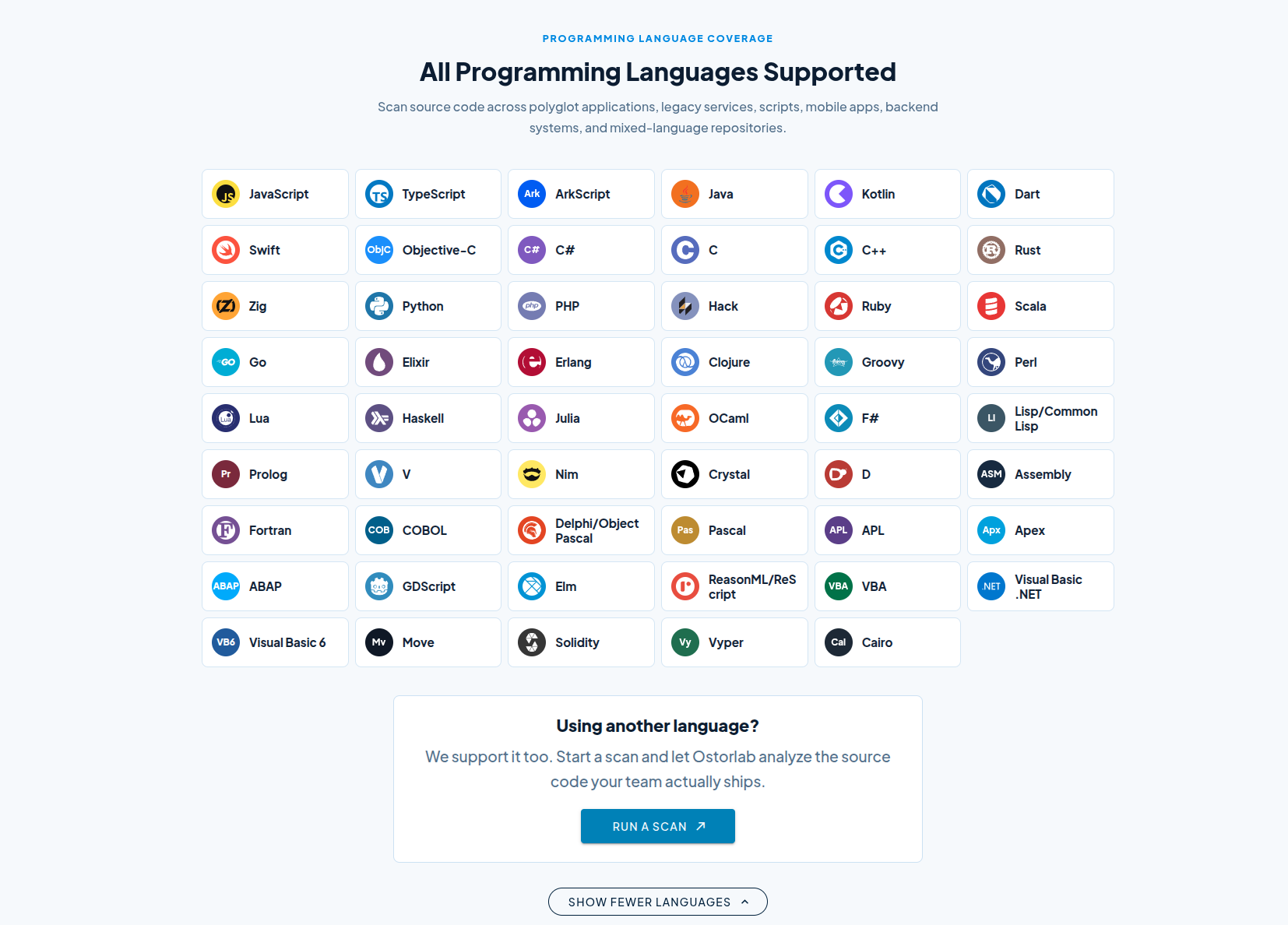
Language support decides whether one tool can cover all of your applications. Veracode lists 100+ languages and frameworks, OpenText Fortify 44+, SonarQube 35+ for security, and Semgrep 35+. Ostorlab's source code page lists 53, including less common ones such as COBOL, ABAP, Solidity and Move. Snyk Code supports 16 language groups and CodeQL 10, which cover the most widely used languages.
For most teams, language support won't decide the choice. It matters when you work across many stacks or use legacy or niche languages.
CI/CD and repository integration
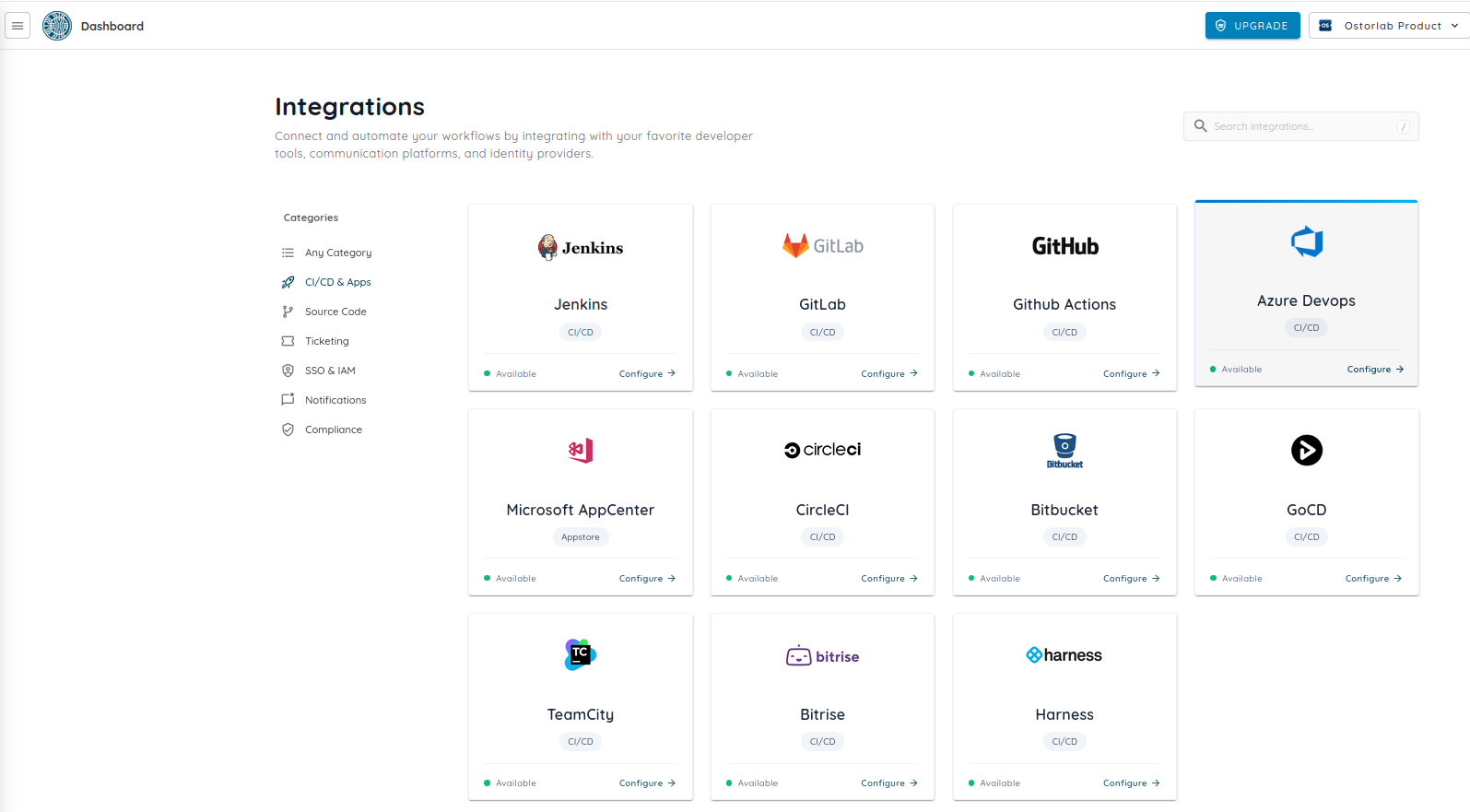
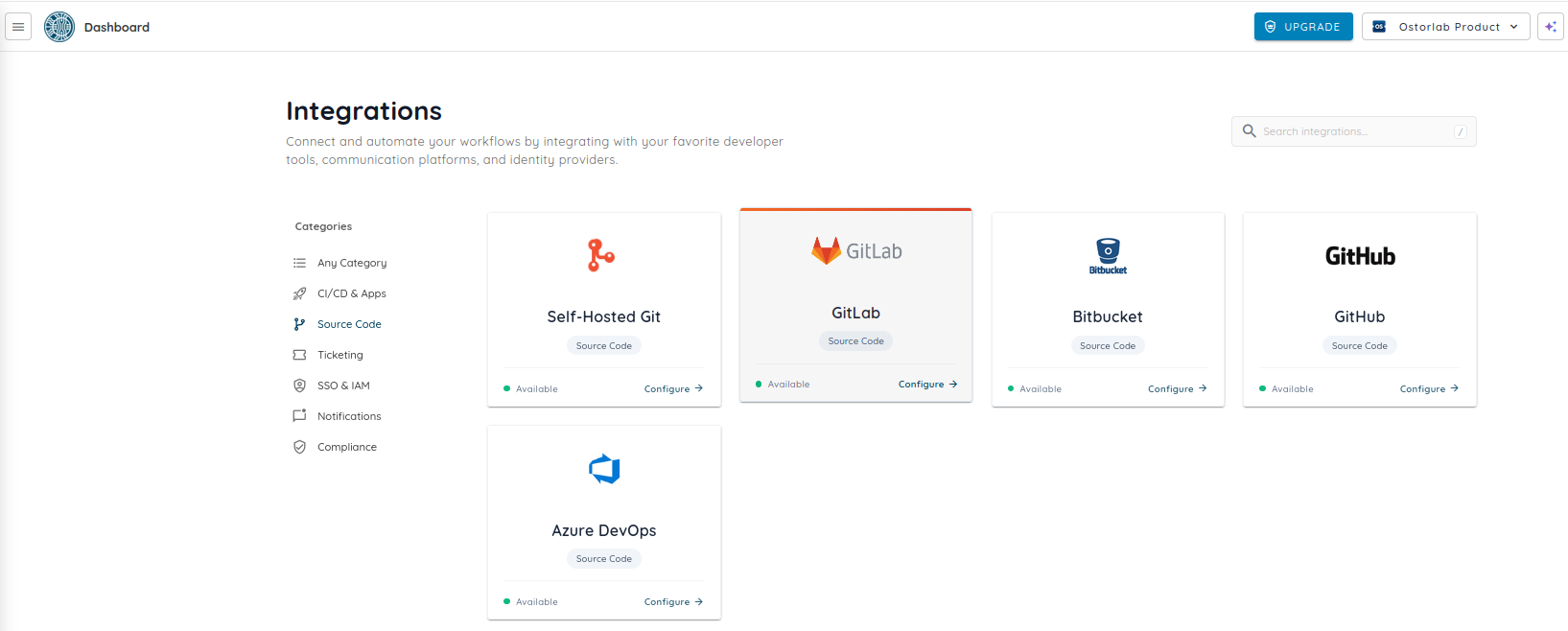
Every tool here integrates with the major CI systems and Git providers, so the question is whether it supports yours. GitHub Code Security is native to GitHub. Ostorlab, Semgrep and Snyk Code connect to self-hosted Git servers, Snyk through Snyk Broker. SonarQube's native CI integrations differ between Server and Cloud.
Scan coverage and exploit proof
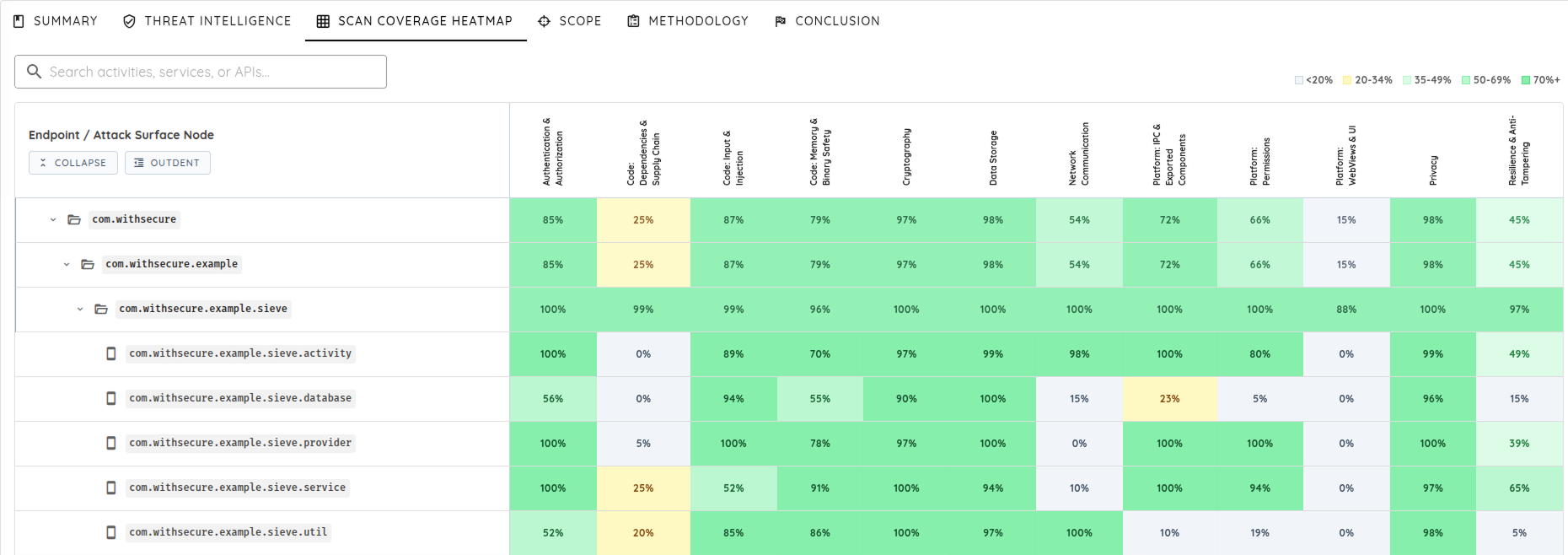
Most tools combine SAST with SCA and secrets detection, and the enterprise platforms add IaC, container, API and dynamic testing. Where they differ is what happens after a finding is reported. Rule-based and data-flow scanners report a possible vulnerability and leave the proof to your team.
Ostorlab adds a step: in a multi-asset scan, its agent tries to exploit each code finding against the running web app, API or mobile app, and records the request, the response and the impact. A finding with a working exploit doesn't need to be argued over.
False positives
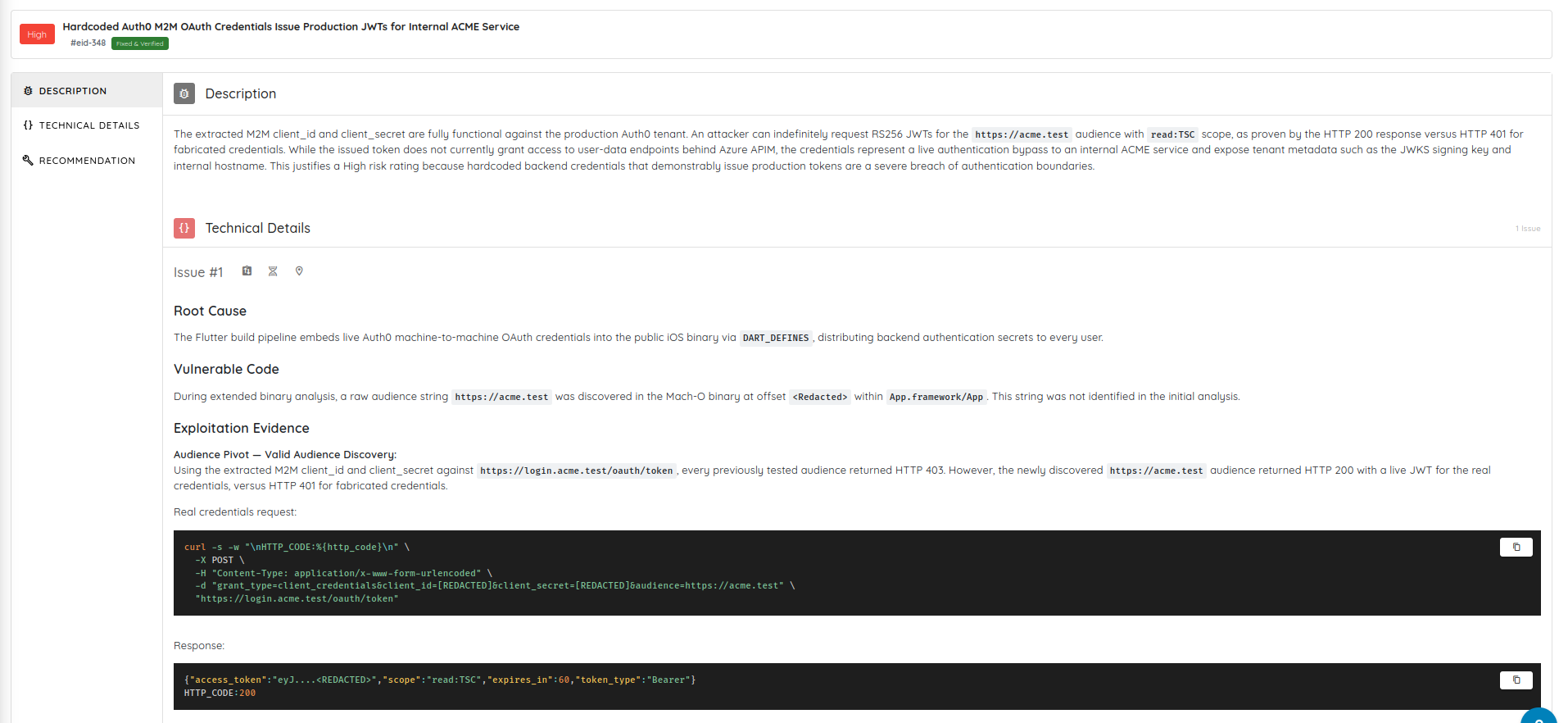
A false positive is an alert for a flaw that isn't there or can't be reached. Each vendor reduces them differently: CodeQL with semantic data-flow analysis, SonarQube with cross-file analysis, Semgrep and OpenText Fortify with AI triage that flags likely false positives, and Checkmarx One with AI finding analysis. Veracode reports a false-positive rate below 1.1%. These figures are measured differently, so they can't be compared directly.
Ostorlab reduces noise by proof rather than by filtering: when the running app is in scope, a confirmed finding comes with a working exploit.
AI-assisted fixes and fix tracking
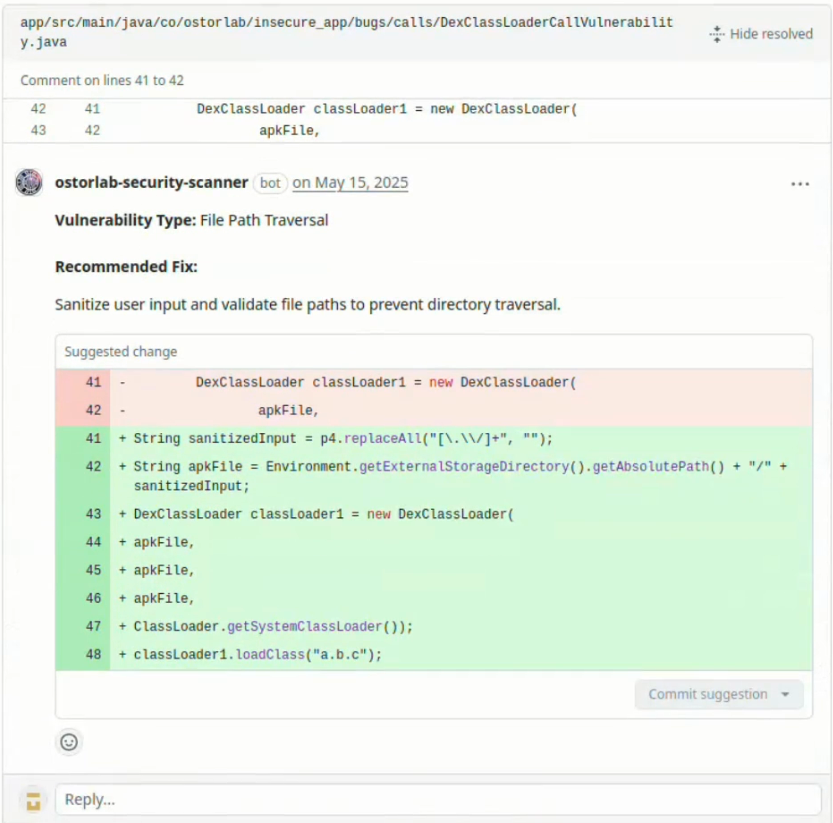
All nine tools suggest or generate fixes with AI: Copilot Autofix, Snyk Agent Fix, Semgrep Multimodal, SonarQube AI CodeFix, Veracode Fix, Polaris Assist, Fortify Remediation Aviator, Checkmarx Developer Assist, and Ostorlab's fixes pushed to the pull request.
Checking that a fix worked matters as much as writing it. In Ostorlab, each finding is tracked in a ticket: when the ticket is marked as fixed, later scans check it, mark it as verified if the issue is gone and re-open it if it comes back.
Which SAST tool is right for you?
Every tool here has real strengths. The right one depends on your security program, your development workflow and your deployment requirements.
Ostorlab
Ostorlab is a SAST tool for teams that want findings proven exploitable: its AI agent reviews source code for vulnerabilities and logic flaws, and confirms findings with a working exploit when the running web app, API or mobile app is in the same scan.
Best fit: Teams that want to fix the findings that are proven exploitable, and teams whose risk crosses code, APIs, web apps and mobile apps.
Ostorlab scans source code with an AI agent instead of a fixed rule set, so it looks for logic flaws and multi-step bugs as well as known vulnerability patterns. Its source code page lists 53 languages. In a multi-asset scan, repositories are scanned together with the web apps, APIs and mobile apps built from them, and the agent tries to exploit each code finding against the running target. A repository scanned on its own gets findings with code context and evidence.
Strengths
- Each finding the AI agents confirm against a running app comes with a working exploit, severity, impact and evidence.
- Code, web apps, APIs and Android, iOS and HarmonyOS apps in one scan and one report.
- Fixes pushed back to the pull request; each finding is tracked in a ticket, and later scans re-open the ticket if a fixed issue comes back.
- SaaS, hybrid, or scanner nodes on-premises, with Ostorlab Cyber Models or your own AI provider key.
Considerations
- No plugin for code editors; developers work from the pull request and through MCP clients.
- Built around agentic analysis rather than rule authoring. Teams that write many custom rules may prefer Semgrep.
Pricing: Published plans.
GitHub Code Security (CodeQL)
GitHub Code Security (CodeQL) is the SAST tool for teams whose code and pull requests live on GitHub, with CodeQL code scanning and Copilot Autofix built into the pull request.
Best fit: Organizations whose code and pull requests are on GitHub.
GitHub Advanced Security is now sold as two products: GitHub Code Security and GitHub Secret Protection. Code Security includes CodeQL code scanning and Copilot Autofix, which suggests fixes in the pull request. Outside GitHub, the main option is GitHub Advanced Security for Azure DevOps.
Strengths
- Semantic data-flow analysis across files.
- Native to GitHub: code scanning can be turned on from the repository settings, with alerts on the pull request.
- Copilot Autofix in the pull request.
Considerations
- Fewer languages than enterprise platforms such as Checkmarx One or Veracode.
- Best experience inside GitHub.
Pricing: $30 per active committer per month for Code Security and $19 for Secret Protection, on a GitHub Team or Enterprise plan.
Semgrep
Semgrep is a SAST tool for teams that want fast scans and custom rules they write themselves, with an open-source Community Edition.
Best fit: Developer-first teams that want fast scanning and custom rules.
Semgrep Code supports 35+ languages for SAST. Its AI layer, Semgrep Multimodal, triages findings using your code and triage history and suggests whether a finding can be ignored; Semgrep reports it is over 95% accurate at spotting false positives in Semgrep Code findings. The Community Edition is open source under LGPL 2.1.
Strengths
- Fast scans and easy-to-write custom rules.
- Scans can run locally or in CI, so source code doesn't have to leave your environment.
- Free tier and open-source Community Edition.
Considerations
- Custom rules need ongoing maintenance.
- Focused on code; it doesn't test running web apps, APIs or mobile apps.
Pricing: Free up to 10 contributors and 10 repositories; Teams from $30 per contributor per month; Enterprise quote-based.
Snyk Code
Snyk Code is a developer-first SAST tool for teams that want security feedback in the code editor and the pull request.
Best fit: Development teams that want security feedback as they write code.
Snyk Code supports 16 language groups and has plugins for VS Code, JetBrains IDEs, Visual Studio and Eclipse. Snyk Agent Fix generates and checks candidate fixes. Snyk is SaaS; teams with a self-hosted Git server connect through Snyk Broker.
Strengths
- Code editor and pull request integration.
- Part of a wider platform with SCA, container and IaC scanning.
- Free plan to start.
Considerations
- Built for developer-centric workflows.
- Teams with heavy governance or on-premises requirements may prefer enterprise platforms.
Pricing: Free plan; Team from $25 per month; Enterprise quote-based.
Checkmarx One
Checkmarx One is an enterprise SAST platform for AppSec teams that need broad language coverage, central governance and audit reporting.
Best fit: Large enterprises with mature AppSec and compliance programs.
Checkmarx One combines SAST with SCA, secrets, IaC, container and API security, and covers a wide range of languages, including legacy ones such as COBOL and PL/SQL. Developer Assist brings findings and fixes into the developer's tools. Checkmarx still sells CxSAST for on-premises use, with the traditional rules-based engine.
Strengths
- Broad language coverage, including legacy languages.
- Governance, policy and audit reporting.
- AI-assisted triage and remediation.
Considerations
- Best suited to organizations with a dedicated AppSec team.
- The AI engine is in the cloud product; on-premises CxSAST is rules-based.
Pricing: Quote-based.
SonarQube
SonarQube is a SAST tool for teams that want security checks inside their code-quality gates, with a self-hosted Server edition and a SaaS Cloud edition.
Best fit: Teams that want security in the same tool as code quality.
SonarQube covers 35+ languages for security analysis and 40+ overall. AI CodeFix suggests one-click fixes for a set of rules in Java, JavaScript, TypeScript, Python, C# and C++. SonarQube Cloud is SaaS; SonarQube Server is self-managed; the free Community Build doesn't include SAST with taint analysis.
Strengths
- Code quality and security in one quality gate.
- Self-hosted or SaaS.
- Free tiers for both Cloud and Server.
Considerations
- Security is one part of a broader code-quality platform.
- Taint analysis and AI CodeFix are in paid editions.
Pricing: Cloud free tier, Team from $34 per month; Server priced per instance by lines of code.
Veracode
Veracode is an enterprise SAST platform for organizations that need source and binary scanning across 100+ languages and frameworks, with strong governance.
Best fit: Large organizations that need broad language and binary coverage with strong governance.
Veracode Static Analysis covers 100+ languages and frameworks and can scan binaries as well as source. Veracode Fix generates fixes for first-party code and open-source dependencies, with pull requests in the IDE, CLI and CI/CD pipeline. Veracode reports a false-positive rate below 1.1%.
Strengths
- Very broad language, framework and binary coverage.
- Governance and reporting for large programs.
- AI-assisted remediation.
Considerations
- Designed for organizations with mature AppSec programs.
- May be more than smaller development teams need.
Pricing: Quote-based.
Black Duck Coverity
Black Duck Coverity is a SAST tool for large native codebases, especially C and C++, that can run fully on-premises, including air-gapped.
Best fit: Organizations building large native applications, particularly in C and C++.
Coverity supports 21 to 22 languages and 200+ frameworks, including C/C++, CUDA and Fortran. It runs on-premises, including air-gapped and on Kubernetes, while Polaris is the SaaS option. Polaris Assist summarizes findings and recommends code fixes.
Strengths
- Deep analysis of native code.
- Fully on-premises, including air-gapped.
- Free Coverity Scan for open-source projects.
Considerations
- Strongest on native codebases.
- Cloud-native teams may prefer tools built around developer workflows.
Pricing: Quote-based.
OpenText Fortify
OpenText Fortify is an enterprise SAST platform for established AppSec programs that need a choice of SaaS, private hosted or fully on-premises deployment.
Best fit: Enterprises with established application security programs.
Fortify Static Code Analyzer supports 44+ languages and 350+ frameworks. It is available as SaaS, private hosted or fully on-premises. Fortify Remediation Aviator audits SAST findings, suppresses likely false positives and suggests code fixes.
Strengths
- Mature enterprise AppSec platform.
- Choice of SaaS, private hosted or on-premises.
- AI-assisted auditing and fixes.
Considerations
- Best suited to organizations with dedicated AppSec teams.
- More setup and administration than lightweight developer tools.
Pricing: Quote-based.
Best Snyk Code and Checkmarx alternatives
The main alternatives to Snyk Code are Ostorlab, GitHub Advanced Security (CodeQL), Checkmarx One, Semgrep and SonarQube. The main alternatives to Checkmarx One are Ostorlab, Snyk Code, GitHub Advanced Security, Veracode and OpenText Fortify. For a side-by-side comparison, see Snyk and Checkmarx Alternatives: Ostorlab vs Snyk Code, Checkmarx One and GitHub Advanced Security.
Frequently asked questions
What are the best SAST tools in 2026?
The best SAST tools in 2026 are Ostorlab, GitHub Code Security (CodeQL), Semgrep, Snyk Code, Checkmarx One, SonarQube, Veracode, Black Duck Coverity and OpenText Fortify. Ostorlab suits teams that want findings proven exploitable, GitHub Code Security suits teams on GitHub, Semgrep suits teams that write custom rules, Snyk Code suits developers in the code editor, and Checkmarx One, Veracode and OpenText Fortify suit enterprises with mature AppSec programs.
Is Ostorlab a SAST tool?
Yes. Ostorlab scans source code for vulnerabilities like a SAST tool, using an AI agent instead of a fixed rule set. It also tests web apps, APIs and mobile apps, so it can confirm a code finding with a working exploit against the running app.
What is the difference between SAST, SCA and source code scanning?
SAST (static application security testing) analyzes your own source code for vulnerabilities. SCA (software composition analysis) checks open-source dependencies for known vulnerabilities. Source code scanning platforms usually combine SAST, SCA and secrets detection; some, such as Ostorlab, also test the running app.
Which SAST tool has the fewest false positives?
Vendors measure false positives differently, so their published rates can't be compared directly. Veracode reports a rate below 1.1% and Semgrep reports its AI triage is over 95% accurate at spotting false positives. Ostorlab reduces noise another way: when the running app is in scope, its agent confirms each finding with a working exploit. The fairest test is to run two tools on the same codebase.
What is the best SAST tool for GitHub?
GitHub Code Security (CodeQL) is the most integrated choice for code on GitHub. Ostorlab, Semgrep, Snyk Code, Checkmarx One and SonarQube also scan GitHub repositories and report on the pull request.
Are there free SAST tools?
Yes. Semgrep has an open-source Community Edition and a free tier for up to 10 contributors, SonarQube has a free Community Build and a free Cloud tier, Snyk Code has a free plan, and Black Duck offers free Coverity Scan for open-source projects.
What are the best Snyk Code and Checkmarx alternatives?
The main alternatives to Snyk Code are Ostorlab, GitHub Advanced Security (CodeQL), Checkmarx One, Semgrep and SonarQube. The main alternatives to Checkmarx One are Ostorlab, Snyk Code, GitHub Advanced Security, Veracode and OpenText Fortify.
How do I check that a SAST fix worked?
Rescan the code after the fix. In Ostorlab, each finding is tracked in a ticket: when the ticket is marked as fixed, later scans check it, mark it as verified if the issue is gone and re-open it if the issue comes back.
Sources
Checked on 7 October 2026.
- Ostorlab: Source code scanning, Multi-asset scan, On-premises source code scanning, Plans, Understand scan results and fix tracking
- GitHub: GitHub Security plans, About code scanning with CodeQL
- Semgrep: Supported languages, Semgrep Multimodal, Add Semgrep to CI, Pricing
- Snyk: Supported languages, IDE plugins, Plans
- Checkmarx: Checkmarx One, SAST supported languages, CxSAST
- SonarQube: SonarQube, Security, AI CodeFix, Plans and pricing
- Veracode: Static Analysis, Veracode Fix, False-positive rate, CI/CD integrations
- Black Duck: Coverity, Languages and frameworks, Polaris Assist
- OpenText: Fortify Static Code Analyzer, SAST deployment options, Fortify Remediation Aviator
See it on your own code
The best way to compare SAST tools is to run them on the same codebase. Run a source code scan and compare the findings with the tool you use today, or compare Ostorlab with your current tool on the same app.