
Ostorlab vs Aikido: AppSec Platform Comparison
Ostorlab vs Aikido on SAST, web and API pentesting, mobile binary testing, cloud posture, BYOK and remediation, with a side-by-side table and an FAQ.
Ostorlab vs Aikido: Securing the Full Application Stack
Quick answer: Aikido and Ostorlab solve different core problems. Aikido consolidates cloud security posture, container scanning, and repository-level AppSec into one dashboard, strong for teams whose main risk lives in cloud infrastructure and source code hygiene. Ostorlab is an agentic AppSec and pentesting platform built first to reverse-engineer and exploit compiled mobile binaries, then extended to web, API, and source code, strong for teams whose risk lives in the applications themselves. Aikido's mobile binary testing is Android-only and needs the source code, and it has no BYOK option; Ostorlab doesn't offer CSPM or container security.
About this comparison
This comparison is published by Ostorlab, which develops and sells the Ostorlab platform compared here. Descriptions of Aikido are based on Aikido's public website and product documentation; descriptions of Ostorlab are based on Ostorlab's own product documentation. Information on other vendors reflects their public websites and documentation as of 3 August 2026. Aikido's mobile pentesting and on-premises offer were rechecked on 2 October 2026, and every Aikido statement in the table and the FAQ on 6 October 2026.
Updated 2 October 2026: Aikido launched white-box Android pentests on 26 August 2026, and Aikido Machine runs on-premises with no outbound connection. The mobile DAST and data-handling statements were corrected, with links to Aikido's pages.
Updated 6 October 2026: every Aikido statement now links to Aikido's own page. Aikido Attack also tests Android apps; Aikido retests single pentest findings; BYOK, app store ingestion, country selection and compiled SBOMs were rechecked.
Evaluation criteria: source code scanning (SAST), agentic web and API pentesting, mobile SAST/SCA, mobile DAST on compiled binaries, app store ingestion, geo-restricted app testing, compiled SBOM, Bring Your Own Key (BYOK) support, single-fix validation, cloud security posture management (CSPM), and container security.
Comparison at a glance
| Capability | Aikido | Ostorlab | Why it matters |
|---|---|---|---|
| Source code (SAST) | ✅ Yes, broad language support, AutoTriage filters noise post-scan | ✅ Yes, findings link directly into the dynamic engine for live exploitability proof | Aikido validates after the fact; Ostorlab validates during the same pass |
| Agentic web/API pentesting | ✅ Yes, Aikido Attack, genuine autonomous agent for web apps and APIs, and white-box Android since 26 August 2026 | ✅ Yes, Agentic Deep Scan, Monkey Tester navigates SPAs, SSO, multi-step logic | Both are real agentic products; scope and origin differ |
| Mobile SAST/SCA (source-level) | ✅ Yes, Swift, Kotlin, Dart supported | ✅ Yes | Both cover repo-level mobile checks |
| Mobile DAST (compiled binary testing) | ⚠️ Android only, white-box: Android pentests need the APK and the codebase, and the build can't use certificate pinning, root or emulator detection, or RASP; iOS "coming soon" | ✅ Yes, tests the shipped APK/IPA directly | Repo scanning misses what's actually in the binary users download |
| App store ingestion | ❌ Not offered: the Android pentest takes an uploaded APK and the codebase | ✅ Yes, pull by bundle ID from App Store or Google Play, no repo connection needed | Removes manual sourcing for hotfixes or third-party apps |
| Geo-restricted app testing | ❌ Not offered: pentest traffic comes from the workspace's region (EU, US or AU), not a chosen country | ✅ Yes, native country selection | Needed for fintech/banking apps with region-gated logic |
| Compiled SBOM | ⚠️ Containers only: SBOMs for repositories and container images; for executables, Aikido asks for a self-reported SBOM | ✅ Yes, extracts dependencies directly from the shipped binary, not just a manifest | Shows what's actually in production, not just what's declared in source |
| BYOK (Bring Your Own Key) | ❌ Not offered: AI features run on models hosted on AWS Bedrock; the on-premises Aikido Machine runs its own model | ✅ Yes, connect your own AI provider keys (OpenAI, Anthropic, Google Vertex) | Matters for regulated industries that can't send code/traffic to a shared model |
| Single-fix validation | ✅ Yes, for pentest findings: Aikido retests one finding at a time, for assessments started in the last 6 months | ✅ Yes, SVA validates one hotfix in minutes without a full rescan | Both retest a single finding; Ostorlab's SVA also works on findings from continuous scans |
| Cloud Security Posture Management (CSPM) | ✅ Yes, core strength | ❌ Not offered | Aikido is the better fit if infrastructure posture is the priority |
| Container security | ✅ Yes, container image scanning | ❌ Not offered | Same as above |
The Clean Concession: Cloud Posture & Containers
It is important to state plainly what a platform is not designed to do. Ostorlab is an active AppSec and pentesting platform; it is not an infrastructure posture management tool.
If your immediate goal is Cloud Security Posture Management (CSPM), detecting misconfigured S3 buckets, or performing routine container scanning, Aikido is the better fit. Their platform excels at providing visibility into cloud-native infrastructure.
Source Code Scanning (SAST): Filtering Theory vs. Proving Reality
Both platforms provide robust, multi-language static analysis (SAST). Aikido deserves full credit here: their SAST engine supports a broad range of languages (including Swift, Kotlin, and Dart) and utilizes a powerful AutoTriage feature. AutoTriage uses reachability analysis and AI reasoning models to filter out the noise and false positives typical of static scanners.
The architectural divergence lies in what happens after a finding is flagged. Aikido uses AI to triage and score static findings after the fact. Ostorlab approaches SAST as the first step in a dynamic chain, linking findings directly into its dynamic engine to prove exploitability live. Rather than delivering a highly-filtered list of theoretical flaws, Ostorlab generates proof-grade evidence, demonstrating exactly how a flaw in the source code executes in the running application.
Web & API Pentesting: Autonomous Agents & The Monkey Tester
Aikido recently introduced Aikido Attack, a genuine autonomous pentesting agent that tests and exploits live web apps and APIs, and, since 26 August 2026, white-box Android apps. It is a highly capable product.
However, the distinction between the two agents comes back to their origins. Aikido's agent started with the web application in front of it and added Android later, with the source code required. Ostorlab's engine was built first for the far less predictable state machine of a compiled mobile app. Because Ostorlab had to solve for chaotic mobile navigation, dynamic UIs, and physical device constraints, it approaches Web and API testing with a Monkey Tester built to handle chaotic mobile navigation. This allows Ostorlab to autonomously navigate complex Single Page Applications (SPAs), multi-step Web SSO, and complex business logic without human scripting.
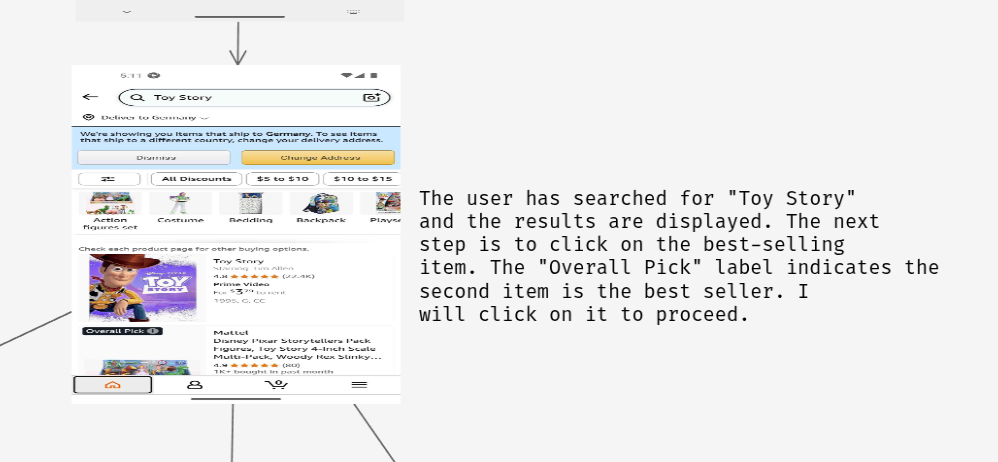
This depth is highly visible in API testing. In a documented case study, Ostorlab's Agentic Deep Scan discovered a scoped Auth0 machine-to-machine (M2M) credential. Rather than just reporting the leaked key, the agent autonomously mapped the credential's authorization surface, successfully escalating a scoped read:TSC token to full Management API access, extracting a 1,000-record user directory.
The Mobile Reality Gap: Testing Production, Not Just Repos
Aikido supports Swift, Kotlin, and Dart for SAST and Software Composition Analysis (SCA). This is a real, valuable capability for iOS and Android developers wanting repository-level checks.
Since 26 August 2026, Aikido also runs Android pentests on the APK, but only white-box: the codebase is required. iOS pentesting is listed as coming soon. Ostorlab tests the compiled Android and iOS app without its source code, including apps pulled from the stores. For regulated industries, testing the shipped binary is a hard requirement.
Ostorlab is a true Mobile DAST optimized for the reality of production:
- Zero-Setup Store Ingestion: drop in a bundle ID, and Ostorlab pulls the application directly from the App Store or Google Play. No repository connection or pipeline wiring required.
- Geo-Fencing: native country selection to fetch and test geo-restricted production variants.
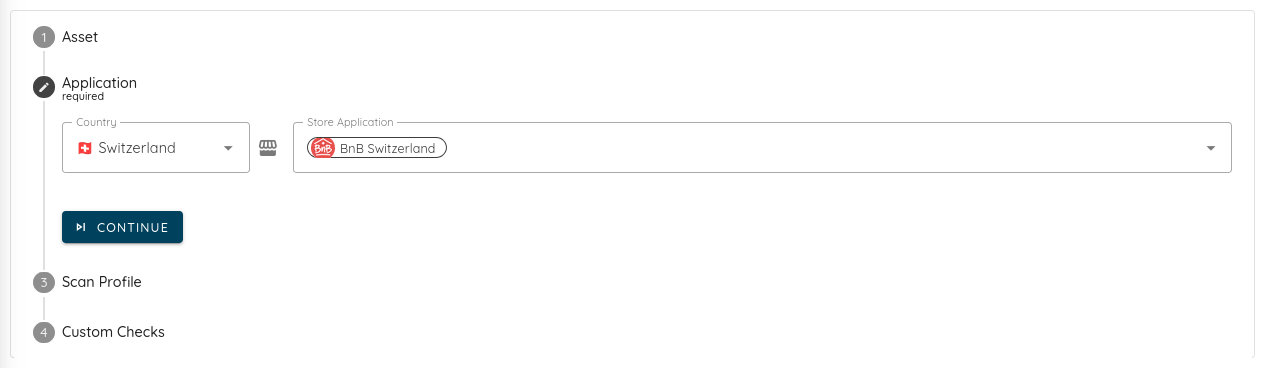
- Compiled SBOMs: rather than scanning a manifest or lockfile, Ostorlab extracts dependencies and statically linked native components directly from the shipped APK or IPA binary, showing exactly what went into production.
Data Privacy and BYOK (Bring Your Own Key)
For highly regulated industries, such as banking, healthcare, and gaming, sending sensitive proprietary code or traffic telemetry through shared, public LLMs is a non-starter.
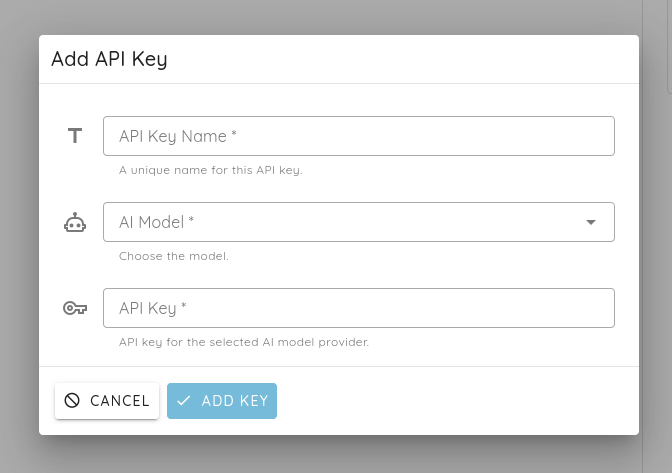
This is where Ostorlab offers a critical architectural advantage: Bring Your Own Key (BYOK). Ostorlab allows security teams to connect their own private AI provider keys, such as OpenAI, Anthropic, or Google Vertex, ensuring that all data reasoning stays strictly inside infrastructure the enterprise already controls. We found no BYOK option on Aikido's public pages: Aikido says its AI features use models hosted on AWS Bedrock. For air-gapped needs, Aikido offers Aikido Machine, an on-premises server that can run with no outbound connection; Ostorlab offers on-premises deployment on Enterprise.
Precision Remediation: SVA
Developer workflows must match the speed of modern deployments. When a developer pushes a hotfix, they cannot wait hours for a full pipeline rescan to know if the patch was successful. Ostorlab provides Single Vulnerability Assessment (SVA), allowing engineering teams to validate one specific hotfix against the live application in minutes, creating a fast, low-friction remediation loop. Aikido also retests a single pentest finding after a fix, for assessments started in the last 6 months.
FAQ
Does Aikido test mobile apps? Aikido supports SAST and SCA for mobile source code, including Swift, Kotlin, and Dart, and white-box Android pentests that need the app's source code. iOS pentesting is listed as coming soon. Ostorlab tests the compiled Android and iOS app without source code.
Does Ostorlab do cloud security posture management (CSPM)? No. Ostorlab is an application security and pentesting platform; for CSPM or container scanning, Aikido is the better fit.
Does Aikido offer BYOK (Bring Your Own Key)? We found no BYOK option on Aikido's pages (checked 6 October 2026): Aikido's AI features use models hosted on AWS Bedrock, and the on-premises Aikido Machine runs its own model. Ostorlab supports connecting your own AI provider keys, including OpenAI, Anthropic, and Google Vertex.
What's the difference between Aikido Attack and Ostorlab's Agentic Deep Scan? Both are genuine autonomous pentesting agents. Aikido Attack tests web apps and APIs, and white-box Android apps since 26 August 2026; Ostorlab's engine was built first for the more complex, chaotic state machine of compiled mobile apps, and that same navigation capability now extends to web SPAs, SSO, and multi-step business logic.
Can Ostorlab test an app without connecting to a source code repository? Yes. Ostorlab can pull an app directly from the App Store or Google Play by bundle ID, including region-locked variants, with no repository connection required.
How does Ostorlab validate a single bug fix? Single Vulnerability Assessment (SVA) validates one hotfix against the live application in minutes, without requiring a full pipeline rescan.
Limitations of this comparison
- Vendor capabilities, pricing, and documentation change frequently. Details about Aikido may have changed since 3 August 2026.
- No independent benchmark of detection rates, false-positive rates, or scan speed was run for this article.
- This article does not report hands-on testing of Aikido. Statements about Aikido reflect its public materials; statements about Ostorlab reflect Ostorlab's own product documentation.
- Verify current capabilities, pricing, and deployment options directly with each vendor, ideally by testing both platforms against your own applications.
The Bottom Line
Choosing between these platforms comes down to where your core risk resides. If your primary focus is locking down cloud infrastructure, managing Kubernetes posture, and keeping repository dependencies clean, Aikido is an exceptional platform. If your crown jewels are the application stack itself, complex web SPAs, chained APIs, and compiled mobile apps, you require a deeper engine. Ostorlab provides the autonomous UI navigation, live proof generation, and strict BYOK privacy controls necessary to secure the hardest parts of the modern application.
See it yourself: run an Agentic Deep Scan against your own web or mobile application and see the difference in depth.
Already using Aikido? Compare Ostorlab with Aikido on the same app: same target, same time box. A finding counts only after your team has reproduced it.